In April 2003, at the outset of the Darfur crisis, the incumbent President of Sudan, Omar al-Bashir, asseverated “I only want land” in front of his amassed troops (International Criminal Court 2008). This statement speaks to the need to understand the systems and rules that govern the use and management of land to unpick the root causes of conflict. This essay will argue that climate change is an indirect cause of conflict. This indirect link between climate change and conflict depends on the strength of land tenure governance. Taking a nuanced approach, this essay will adhere to the ‘threat multiplier’ framework (Centre for Naval Analyses (CNA) Corporation Military Advisory Board 2007), to argue that climate change has an amplifying effect on the occurrence or intensification of conflict risks only where there is the presence of poor land tenure governance. Given the breadth that this topic encompasses, conflict will be delimited to civil wars in the Middle East and North Africa region. Climate change will be analysed through slow onset droughts widely agreed to be induced by anthropogenic climate change. To demonstrate this theoretical framework’s value, this essay will examine three case studies of Sudan, Syria and Morocco.
This essay proceeds in four sections. First, this essay will situate its contribution in debates enveloping the climate-conflict nexus. The second and third sections will illuminate the importance of poor land tenure governance in establishing climate-conflict causality by shedding new light on the cases of Sudan and Syria rooted in public consciousness. The fourth section will provide a comparative case of Morocco to demonstrate that robust land tenure governance serves as a stopgap to climate change’s effect on the occurrence or intensification of civil war.
Climate change-conflict nexus
Much ink has been spilled over the causality debate. For now, the debate remains deadlocked. Arguments committed to proving the causal relationship were originally steeped in largely neo-Malthusian terms, attempting to make sense of a world ridden with conflict, despite the dominating Fukuyama (1992) discourse brimming with post-cold war optimism (see Homer-Dixon 1999; Klare 2002; Smith and Vivekanada 2007). While others, in fairly equal measure, and often laden with excoriating tones, have leapt at the chance to disprove this causality given the ostensibly baseless empirical and theoretical approaches of their colleagues which rely on inferences in lieu of evidence (see De Châtel 2014; Selby et al. 2017; Mach et al. 2020). Within the broader field, it is important to situate these critiques decrying a lack of evidence to prove causality within a much longer tussle to unpick the causes of civil war (see Nathan 2005). By contrast, the pendulum swung heavily away from this linear debate with the advent of Goodman’s paradigm shifting ‘threat multiplier’ thesis (CNA Corporation Military Advisory Board 2007) to demonstrate how climate change exacerbates existing social, political and economic vulnerabilities to indirectly amplify threats of conflict. Now the mainstay in the climate security discourse, adjacent literature has rebutted the view that the relationship demands a straightforward, linear explanation (Centre for Naval Analyses Military Advisory Board 2007; Hendrix and Salehyan 2012; Gleditsch and Nordås 2014).
This essay will carve out a new angle in existing literature by arguing that the strength of land tenure governance is of primary importance to indirect causal claims. This original theoretical framework benefits from a novel application of contrasting three case studies of Sudan, Syria and Morocco. This approach sheds light on the root causes of conflict and jointly provides a new conceptual approach for peacebuilding programs to understand the conditions in which climate change can spark or nourish conflict. Related scholarship, while minimal, has sought to provide reprieve to the gap of studies dissecting the relationship between land governance and certain climate mitigation and adaptation measures (see Hunsberger et al. 2017; Froese and Schilling 2019). Scholars have unpacked the political economy in reference to drought (De Châtel 2014; Selby et al. 2017; Ide 2018), and, less frequently, examined land tenure specifically in relation to one state (Syrian Network for Human Rights 2023). However, the centrality of land tenure governance applied across civil wars in the Middle East and North Africa region is yet to be examined.
Sudan
As far as the public’s collective memory goes, the Darfurian crisis may be the most emblematic case of the first conflict to be directly linked with climate change. It was the voice of former UN Secretary-General Ban Ki-Moon that marked an inflection point in providing authority to the advent of climate linked to security (Moon 2007). Subsequently, climate-war narratives perpetuated in relation to Darfur by Sachs (2008) – first spearheaded by the likes of Kaplan (1994) – linked Darfur’s soaring population directly with declining rainfall leading to lethal competition over land and water. This linear story perpetuates the notion of Darfur as a blank slate upon which climate change wreaks havoc. Instead, it was the nature of land tenure governance that was central to the indirect link of droughts with civil war.
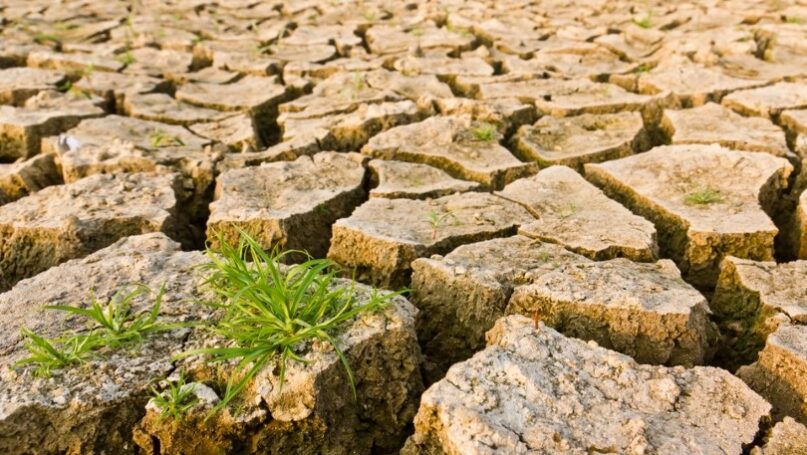
On the surface, it is clear that prolonged violence that has plagued Sudan has been consistent with droughts, to the point of heightening in the lead up to the uprisings in Darfur. In 2003, the Sudan Liberation Army and the Justice and Equality Movement, both Darfuri rebel movements, instigated an armed rebellion against Al-Bashir’s government (Parker et al. 2017). In response, the government permitted militias or ‘Jangaweed’ to launch violence against primarily the non-Arab population across Darfur which degenerated into the protracted state of crisis (Day 2023, 283; Parker et al. 2017). While Darfur’s decent into crisis in 2003 was marked by a particularly turgid bout of violence, it was nestled into a period between 1956 and 2005 of an almost incessant state of war between the North and South (Ndongo and Mae 2013; Day 2023). Over this period, and reaching back over the last century, desert area has expanded, shifting approximately 50 to 200 kilometres southward over previous semi-desert regions according to United Nations Environment Programme (UNEP 2007). The slow onset desertification compounded in the lead up to the Darfur crisis which induced significant stresses onto largely pastoralist societies in Darfur (UNEP 2007). Prior to 2003, rainfall fell sharply, and desertification occurred at the time when pastoralists migrated south, linked to subsequent clashes with agriculturalists. This escalated in accordance with largely low intensity conflict until 1999 through to major violence in February 2003 (Mazo 2009; Daoudy 2021). At large, strong correlations can be demonstrated between annual temperature variations and the presence of civil war (Burke et al. 2009).
These strong correlations of droughts and civil war suffered in Sudan only occurred in connection with poor governance over land tenure. In the lead up to the Darfur crisis, several notable shifts impacting the population’s substantial reliance on subsistence agriculture to produce severe negative externalities (Republic of Sudan 2006; Berdal et al. 2013). First, fundamental shifts in long-standing governance mechanisms over land tenure frameworks removed deeply held notions of societal conflict mitigation (Mazo 2009). Prior to 1970, determination of property rights were resolved through locally established, traditional customs (Mazo 2009). Customary land tenure provided sedentary groups collective rights to the land around their village (Olsson 2010). Following 1970, these were replaced by the imposition of prescriptive statutory regulations under the Unregistered Land Act (1970). These regulations were realised through the subsummation of land by the government where there was no prior formal registration (Olsson 2010; Pantuliano 2017). Without traditional local customs of land tenure regimes, a yawning chasm of conflict resolution mechanisms to mitigate conflict was left behind. This manifested in land grabbing from pastoralists primarily made up of ethnically African Darfurians.
Secondly, in Darfur, this was compounded with vacuums in administrations to impose access to land rights in the lead up to the conflict in 2003 such as the government supported division of Dar Masalit in 1995 into 13 emirates (Abdul-Jalil 2006). This produced a chasm of local administration which spurred ethnic violence, plunging Western Darfur into a declared emergency region until 1999 marked by a void of allocation of land for settlement and agriculture (Abdul-Jalil 2006). Therefore, the antithesis of Polgreen’s (2007) argument that climate change was less important than land governance by the Government of Sudan in the conflict is true. It is the mismanagement of land tenure governance that was the lynchpin in fuelling the drought’s effect on conflict. This poor governance compounded with the resource scarcity from the longstanding and escalating desertification which led to competition over decreasing swathes of now contested arable land. This contest helped to prompt pastor-herder conflicts as livelihoods deteriorated (Ndongo and Maes 2013; Republic of Sudan 2006) and around two million people became internally displaced (Berdal et al. 2013) damaging the “moral geography” (De Waal 2005, 87) of Darfur.
Droughts compounding with poor governance frameworks fuelled underlying ethnic grievances and horizontal inequalities to spark violence. Darfurian society comprises of traditional divides between the primarily African Darfurian sedentary agriculturalists and the Arab Darfurian nomadic herder population (Prunier 2008; Ndongo and Maes 2013). The reduction in precipitation associated with regional climate change has emerged as a structural stress factor on pastoralist societies, particularly in Darfur who were driven further south due to desertification (UNEP 2007). These experiences of grievances and famine are likely to precipitate and mould conflict (Malone and Berdal 2000, 31). Therefore, clashes over incompetently governed land were intrinsically tied to African Darfurian grievances with the Khartoum-supported Arab Darfurians. These were perpetuated by the Janjaweed’s attacks on villagers of ‘African’ villages while Janjaweed initiated land grabs for ‘Arabs’ (Prunier 2008). Broadly, the poor governance frameworks were couched in a political setting where Darfur has been side-lined into an asymmetric power imbalance with Khartoum perpetuating grievances over structural inequalities (Verhoeven 2011; Berdal et al. 2013).
The imposition of statutory land tenure laws and dismantling of traditional conflict resolution mechanisms undermined local coping capacities and exacerbated the population’s vulnerability to desertification. Suffering from food insecurity and loss of livelihoods encouraging southern migration was compounded by the extant grievances between largely ethnically divided farmers and herders. At its roots, the weak land tenure governance precipitated the conditions for climate change’s impact on the Darfur crisis in February 2003.
Syria
Syria has parallels with the preceding Darfur crisis in terms of poor land tenure governance constituting the necessary ingredient to link droughts with civil war. However, the manifestations of poor land tenure governance differed. The Syrian civil war has become a widely invoked emblematic case to lend proof to the ‘threat multiplier’ argument. Former President of the United States, Barack Obama’s (2009), claim that climate-change connected drought aided in fuelling unrest in Syria prior to its descent into civil war was bolstered by the World Bank (Verme et al. 2015, 33), scholars (Gleich 2014) and intergovernmental reports (King et al. 2015) alike. The fuel behind this indirect link of climate contributing as a cause of unrest in Syria was weak land tenure management.
Syria suffered from severe protracted drought from 2007 to 2012 (Werrell, Femia and Sternberg 2015). Over the same period, Syria’s ranking on the National Design for Global Adaptation Index, hovered around 122 out of 177 countries for high climate vulnerability (University of Notre Dame 2024). While the 2000s was marked by a rare very acute drought and decade of dryness (Selby et al. 2017), it was in particular, the period between 2007 to 2009, that was notably more severe than what is typically seen in the historical record (Ide 2018). A long-term drying trend in Syria underpinned by a severe decrease in precipitation contributed to the severity of the drought prior to the uprising. The 2007 to 2008 winter was the driest year in observed record with precipitation 35 per cent below the average (Kelley et al. 2015).
Poor land tenure governance in Syria was a necessary condition for the drought to fuel conflict. First, Syria’s state housing, land and property rights system was used to evict and gain possession of land (Unruh 2016). At large, Syria’s land tenure systems, despite being officially comprised of private and public categories, in reality, incorporate varied Islamic, customary and statutory procedures (UN Habitat 2013). In agricultural settings, customary tenure systems dominated (UN Habitat 2013). The Al-Assad administration undertook land grabs and mass evictions of populations by designating land as military areas in violation of property laws (Unruh 2016). Where extant property laws were adhered to, they were interpreted by the Al-Assad administration to justify expropriation of property, largely from the Syrian Kurdish population (Housing and Land Rights Network of Habitat International Coalition 2015). The unjustified land tenure governance of the Alawite-backed Al-Assad administration fuelled structurally embedded grievances amongst Kurdish and non-Alawite Arab populations (Werrell Femia and Sternberg 2015; Unruh 2016).
Second, the Al-Assad administration orchestrated irresponsible governance over agricultural land use by providing incentives for water-intensive farming such as generous subsidises for wheat and cotton farming (Werrell Femia and Sternberg 2015). These resources are largely reliant on flood irrigation which generates immense water wastage through evaporation and runoff recording water efficiency of 45 per cent, representing a marked reduction from the 75 per cent generally attained under conventional practices (Water Watch 2006; Werrell Femia and Sternberg 2015). While the population has suffered from water scarcity since the 1950s (Ide 2018), the acute nature of droughts in the lead up to conflict were accompanied by the necessitating factor of poor governance frameworks.
Poor governance over land compounded in part due to the vulnerability of the population’s over-reliance on wheat production prior to 2006 at the onset of the drought (Gelvin 2012). This overreliance on wheat placed deleterious stress on resources, denying populations of their food security and source of livelihood which consequently magnified inequalities (Daoudy 2020). The protracted drought preceding the uprising resulted in the most detrimental crop failures and livestock damage in recent history (Werrell, Femia and Sternberg 2015). It is no coincidence that the nuclei of the major anti-regime protests that spurred the outbreak of civil war in early 2011 were cities in regional agricultural beds including Dara’a and the Hawran region enveloping the capital (Gelvin 2012; Werrell Femia and Sternberg 2015). Dara’a, in particular, was significantly affected by severe drought and water scarcity marked by an absence of government assistance (Werrell, Femia and Sternberg 2015). This may have led to nourishing social instability through a noxious compounding effects of resource competition, weak economic performance and decreased state capability (Hendrix and Salehyan 2012). Resource insecurity was a main driver in the loss of livelihoods of over 800,000 Syrians due to pervasive droughts (The New Humanitarian 2009) and the 1.3 to 1.4 million Syrians who were displaced from agricultural rural areas and relocated to urban areas (Gelvin 2012). Poor land governance provided the roots for an overreliance on agriculture which cultivated the conditions for conflict in the presence of drought.
Harmful land tenure governance policies severely winded the population’s climate change coping capacities at the time of drought in Syria. Nestled in a hotbed of frustration with a political economy that benefited the urban elites and exploitation of agricultural regions that contributed to disenfranchised Kurdish and non-Alawite Arabs, climate change indirectly concocted a mindset of nothing to lose and everything to gain. The uprisings, perhaps fixed in an embedded Fanonian narrative (1961) of the imperative to spearhead their own survival in an enduring defiance against the regime’s deadly, incessant force (Bellin 2012).
Morocco
Morocco’s robust land tenure governance has presaged the absence of a link between droughts leading to civil war. Despite politically declared droughts, which instigated government aid in 1992-1995, 1998-2001, 2005, 2007 and 2015-2016, Morocco has not experienced civil war (World Bank Group 2023). Globally, Morocco is one of the most water-stressed countries, experiencing an average temperature increase above climate change trends and exponential decrease in rainfall over the past decades (World Bank Group 2023).
The Moroccan government has a history of investments in robust laws and practices that govern the use of land. This has greatly decreased the gravity of resource scarcity pressures derived from droughts that could have fuelled violence. Important political backing channelled through the King, the Prime Minister and the Ministry of Finance, have played a pivotal role in championing water reform (World Bank Group 2007). A culture of openness to reform in the wake of the 1992-1995 droughts, engendered the Law No. 95-10 in 1995 (Doukkali 2005). Legislation which prevents agriculturalists from reselling spring water to realise much higher returns than those derived from using the water for irrigation Centre for Environment and Development for the Arab Region and Europe 2006). Successive governance in Morocco has continued to provide robust measures. The Plan Maroc Vert (Green Morocco Plan) 2009-2019, was initiated by the Moroccan monarchy to, in part, reduce the sector’s susceptibility to climate change threats (Gladys Lopez-Acevedo et al. 2021). There has been consistent implementation of policies such as the installation of drought-tolerant crops, crop rotation (Daoudy 2021), grants to stimulate adoption of water efficient irrigation (Jihad 2016; Sowers Vengosh and Weinthal 2011)and national schemes to redistribute water resources through large-scale inter-basin transfers (World Bank Group 2007, 36). The Green Morocco Plan has been attributed to conserving two billion cubic meters of water and expanding cultivated land by 450,000 hectares (Gladys Lopez-Acevedo et al. 2021). The lessons learned approach instigated and consistently adopted by Morocco, with political backing denied the severe droughts experienced to result in linking to a civil war.
Robust land tenure policies denied climate change a role as an indirect cause of conflict in Morocco. While not following sectarian lines, Morocco’s divisions are predominately ethnic, with 40 to 70 per cent of the population identifying as Amazigh (Gelvin 2012, 89). Amazigh are largely disaffected, experiencing grievances of marginalisation in rural areas vulnerable to severe droughts and largely reliant on pastoralist livelihoods diverging from the prosperous, largely urbanised Arab population (Gladys Lopez-Acevedo et al. 2021; World Bank Group 2021). In February 2011, while still in the wake of two successive damaging droughts in 2005 and 2007 that required government relief, the Amazigh’s spearheaded a protest movement named the ‘Printemps Amazigh’ (Amazigh Spring) (Gelvin 2012, 89). The horizontal inequalities between the Amazigh and Arabs underpinning their protest movement seeking equal treatment such as recognising Tamazight as an official language (Gelvin 2012). The robust history of land tenure governance denied the droughts as a contributing grievance factor in the uprising during the ‘Printemps Amazigh’. While Morocco is often cited as vulnerable to climate change (World Bank Group 2021), its strong land tenure frameworks played a crucial role in denying drought to have an indirect impact on the occurrence of a civil war.
Conclusion
This essay has served to combat the appealing linear narrative that directly links climate change as a straightforward cause of conflict. Despite the striking tendency to abstract the climate-conflict nexus from its political, cultural, historic context, it is clear that it is the strength of domestic land tenure governance that is required to provoke climate change’s link with conflict. The value of this understanding is two-fold. This essay unpacks that perhaps climate change has become the latest exemplar in a longer cautionary tale of the need to analyse conflict as a big messy web of social, political, economic stressors, each to varying importance in each varying context. A second benefit from a political economy analysis perspective, is that the land governance theoretical framework could provide a new lens through which peacebuilding initiatives can understand and slice up this messy web to determine when climate change will help provoke, nourish and nudge along conflict.
Bibliography
Abdul-Jalil, M. 2006. “The Dynamics of Customary Land Tenure and Natural Resource Management in Darfur.” Land Reform, Settlement and Cooperatives, 9–23. https://www.researchgate.net/publication/285856199_The_Dynamics_of_Customary_Land_Tenure_and_Natural_Resource_Management_in_Darfur.
Bellamy, Alex J. 2017. “The UN Security Council and the Problem of Mass Atrocities: Towards a Grand Bargain in Global Insecurity.” In Global Insecurity: Futures of Global Chaos and Governance, edited by Anthony Burke and Rita Parker, 311–24. London: Palgrave Macmillan UK.
Bellin, Eva. 2012. “Reconsidering the Robustness of Authoritarianism in the Middle East: Lessons from the Arab Spring.” Comparative Politics 44 (2): 127–49. https://doi.org/10.5129/001041512798838021.
Berdal, Mats, and Dominik Zaum. 2013. Political Economy of Statebuilding: Power after Peace. Oxford: Routledge.
Burke, Marshall B., Edward Miguel, Shanker Satyanath, John Dykema, and David Lobell. 2009. “Warming Increases the Risk of Civil War in Africa.” Proceedings of the National Academy of Sciences 106 (49): 20670–74. https://doi.org/10.1073/pnas.0907998106.
Centre for Environment and Development for the Arab Region and Europe. 2006. “Water Conflicts and Conflict Management Mechanisms in the Middle East and North Africa Region.” https://web.cedare.org/wp-content/uploads/2017/03/Water-Conflicts.pdf.
CNA Corporation Military Advisory Board. 2007. National Security and the Threat of Climate Change. Alexandria, VA: CNA Corporation. https://www.cna.org/analyses/2007/national-security-and-the-threat-of-climate-change.
Day, Adam. 2023. “The Unbuilding of a State.” In The Political Economy of Civil War and UN Peace Operations, edited by Mats Berdal and Jake Sherman, 199–218. Oxford: Routledge.
De Châtel, Francesca. 2014. “The Role of Drought and Climate Change in the Syrian Uprising: Untangling the Triggers of the Revolution.” Middle Eastern Studies 50 (4): 521–35. https://doi.org/10.1080/00263206.2013.850076.
Centre for Naval Analyses Military Advisory Board. 2007. National Security and the Threat of Climate Change. Alexandria, VA: Center for Naval Analysis Corporation. https://www.cna.org/mab/reports.
Daoudy, Marwa. 2020. The Origins of the Syrian Conflict: Climate Change and Human Security. Cambridge: Cambridge University Press.
Daoudy, Marwa. 2021. “Rethinking the Climate–Conflict Nexus: A Human–Environmental–Climate Security Approach.” Global Environmental Politics 21 (3): 4–25. https://doi.org/10.1162/glep_a_00609.
De Waal, Alex. 2005. Famine That Kills: Darfur, Sudan. Oxford: Oxford University Press.
Fanon, Frantz. 1961. The Wretched of the Earth. Paris: François Maspero.
Froese, Rebecca, and Janpeter Schilling. 2019. “The Nexus of Climate Change, Land Use, and Conflicts.” Current Climate Change Reports 5 (1): 24–35. https://doi.org/10.1007/s40641-019-00122-1.
Fukuyama, Francis. 1992. The End of History and the Last Man. London: Free Press.
Gelvin, James L. 2012. The Arab Uprisings: What Everyone Needs to Know. Oxford: Oxford University Press.
Lopez-Acevedo, Gladys, et al. 2021. Morocco’s Jobs Landscape: Identifying Constraints to an Inclusive Labor Market. Washington, D.C.: World Bank Group. https://documents1.worldbank.org/curated/en/236951615353771651/pdf/Moroccos-Jobs-Landscape-Identifying-Constraints-to-an-Inclusive-Labor-Market.pdf.
Gleditsch, Nils Petter, and Ragnhild Nordås. 2014. “Conflicting Messages? The IPCC on Conflict and Human Security.” Political Geography 43: 82–90. https://doi.org/10.1016/j.polgeo.2014.08.007.
Gleich, Peter. 2014. “Water, Drought, Climate Change, and Conflict in Syria.” Weather, Climate and Society 6. https://doi.org/10.1175/WCAS-D-13-00059.1.
Goodman, Sherri. 2024. Threat Multiplier: Climate, Military Leadership, and the Fight for Global Security. Washington, D.C.: Island Press.
Hendrix, Cullen S., and Idean Salehyan. 2012. “Climate Change, Rainfall, and Social Conflict in Africa.” Journal of Peace Research 49 (1): 35–50. https://doi.org/10.1177/0022343311426165.
Housing and Land Rights Network of Habitat International Coalition. 2015. Reconstruction: The Next Struggle in Syria. In The Land and Its People: Civil Society Voices Address the Crisis over Natural Resources in the Middle East/North Africa. Habitat International Coalition – Housing and Land Rights Network. https://mail.hlrn.org/img/publications/land_and_its_people.pdf.
Homer-Dixon, Thomas F. 1999. Environment, Scarcity, and Violence. Princeton: Princeton University Press.
Hunsberger, Carol, et al. 2017. “Climate Change Mitigation, Land Grabbing and Conflict: Towards a Landscape-Based and Collaborative Action Research Agenda.” Canadian Journal of Development Studies / Revue canadienne d’études du développement 38 (3): 305–24. https://doi.org/10.1080/02255189.2016.1250617.
Ide, Tobias. 2018. “Climate War in the Middle East? Drought, the Syrian Civil War and the State of Climate-Conflict Research.” Current Climate Change Reports 4 (4): 347–54. https://doi.org/10.1007/s40641-018-0115-0.
International Criminal Court. 2008. ICC OTP Summary 2008: The Situation in Darfur, Sudan. https://www.icc-cpi.int/sites/default/files/NR/rdonlyres/64FA6B33-05C3-4E9C-A672-3FA2B58CB2C9/277758/ICCOTPSummary20081704ENG.pdf.
Jihad, M. 2016. “Climate Change and Rural Development in the Middle Atlas Mountains and Fringe Areas (Morocco).” Journal of Alpine Research 104 (4). https://doi.org/10.4000/rga.3465.
Kaplan, Robert. 1994. “The Coming Anarchy.” Atlantic Monthly. https://www.theatlantic.com/magazine/archive/1994/02/the-coming-anarchy/304670/.
Kelley, Colin, Shahrzad Mohtadi, Mark Cane, and Yochanan Kushnir. 2015. “Climate Change in the Fertile Crescent and Implications of the Recent Syrian Drought.” Proceedings of the National Academy of Sciences 112 (11). https://doi.org/10.1073/pnas.1421533112.
King, David, Daniel Schrag, Zhou Dadi, Qi Ye, and Arunabha Ghosh. 2015. Climate Change: A Risk Assessment. London: UK Foreign and Commonwealth Office. https://www.csap.cam.ac.uk/projects/climate-change-risk-assessment/.
Klare, Michael T. 2002. Resource Wars: The New Landscape of Global Conflict. New York: Henry Holt and Company.
Mach, Katharine J., W. Neil Adger, Halvard Buhaug, Marshall Burke, James D. Fearon, Christopher B. Field, Cullen S. Hendrix, et al. 2020. “Directions for Research on Climate and Conflict.” Earth’s Future 8 (7). https://doi.org/10.1029/2020EF001532.
Malone, David, and Mats R. Berdal. 2000. Greed and Grievance: Economic Agendas in Civil Wars. Boulder, CO: Lynne Rienner Publishers.
Mazo, Jeffrey. 2009. “Chapter Three: Darfur: The First Modern Climate-Change Conflict.” Adelphi Papers 49 (409): 73–86. https://doi.org/10.1080/19445571003755538.
Doukkali, Mohammed Rachid. 2005. “Water Institutional Reforms in Morocco.” Water Policy 7 (11): 71–88. https://doi.org/10.2166/wp.2005.0005.
Moon, Ban Ki. 2007. “A Climate Culprit in Darfur.” Washington Post. https://www.washingtonpost.com/archive/opinions/2007/06/16/a-climate-culprit-in-darfur/8ffc62ad-14f2-412f-80ed-103545fe5697.
Nathan, Laurie. 2005. The Frightful Inadequacy of Most of the Statistics: A Critique of Collier and Hoeffler on Causes of Civil War. London: London School of Economics and Political Science.
Ndongo, Louis M., and Frank Maes. 2013. “Climate Change, Human Rights and the Darfur Crisis.” In Biodiversity and Climate Change, edited by Frank Maes, An Cliquet, Willemien du Plessis, and Heather McLeod-Kilmurray, 122–44. Gent: Edward Elgar Publishing.
Obama, Barack. 2009. “A Just and Lasting Peace.” Nobel Peace Prize Lecture. http://www.nobelprize.org/nobel_prizes/peace/laureates/2009/obama-lecture_en.html.
Olsson, Ola. 2010. After Janjaweed? Socioeconomic Impacts of the Conflict in Darfur. Washington, D.C.: World Bank Group. https://documents1.worldbank.org/curated/en/809291468326208209/pdf/776440JRN020100LIC00After0Janjaweed.pdf.
Pantuliano, Sara. 2017. The Land Question: Sudan’s Peace Nemesis. London: Overseas Development Institute. https://www.files.ethz.ch/isn/91175/2007-12_The%20Land%20Question.pdf.
Parker, Richard, and Anthony Burke. 2017. “The United Nations and Global Security.” In Global Insecurity: Futures of Global Chaos and Governance, edited by Anthony Burke and Richard Parker, 347–67. London: Palgrave Macmillan UK.
Reynolds, Paul. 2007. “Security Council Takes on Global Warming.” BBC News. http://news.bbc.co.uk/1/hi/world/americas/6559211.stm.
Polgreen, Lydia. 2007. “A Godsend for Darfur, or a Curse?” New York Times. https://www.nytimes.com/2007/07/22/weekinreview/22polgreen.html.
Prunier, Gérard. 2008. Darfur: A 21st Century Genocide. Ithaca, NY: Cornell University Press.
Republic of Sudan. 2006. Sudan National Action Programme: A Framework for Combating Desertification in Sudan in the Context of the United Nations Convention to Combat Desertification. Khartoum: Ministry of Agriculture and Forestry, National Drought and Desertification Control Unit. https://www.unccd.int/sites/default/files/naps/sudan-eng2006.pdf.
Sachs, Jeffrey. 2008. Common Wealth: Economics for a Crowded Planet. London: Allen Lane.
Selby, Jan, Omar Dahi, Christiane Fröhlich, and Mike Hulme. 2017. “Climate Change and the Syrian Civil War Revisited.” Political Geography 60: 232–44. https://doi.org/10.1016/j.polgeo.2017.05.007.
Smith, Dan, and Janani Vivekananda. 2007. A Climate of Conflict: The Links Between Climate Change, Peace and War. London: International Alert. https://www.international-alert.org/publications/climate-conflict/?gad_source=1&gclid=Cj0KCQiAuou6BhDhARIsAIfgrn5VLn5kLqQo46FZ5l7cPqYh8YsWgweDs5JrSgY_uUvtqcckcYsOUKMaArrTEALw_wcB.
Syrian Network for Human Rights. 2023. The Laws Introduced by the Syrian Regime to Control Real Estate Ownership and Lands Before and Since the Beginning of the Popular Uprising in March 2011. London: Syrian Network for Human Rights. https://snhr.org/wp-content/uploads/2023/05/R230415E-3.pdf.
Sowers, Jeannie, Avner Vengosh, and Erika Weinthal. 2011. “Climate Change, Water Resources, and the Politics of Adaptation in the Middle East and North Africa.” Climatic Change 104 (3): 599–627.
The New Humanitarian. 2009. “Drought Driving Farmers to the Cities.” https://www.thenewhumanitarian.org/feature/2009/09/02/drought-driving-farmers-cities.
United Nations Habitat. 2013. Emergency Response to Housing Land and Property Issues in Syria. Nairobi: United Nations Habitat. https://www.humanitarianlibrary.org/sites/default/files/2013/05/Housing_Land_%26_Property_issues_in_Syria_-_Briefing_Note_30.01.2013.pdf.
United Nations Environment Programme. 2007. Sudan: Post-conflict Environment Assessment. Nairobi: United Nations Environment Programme. https://www.unep.org/resources/assessment/sudan-post-conflict-environmental-assessment.
University of Notre Dame. 2024. Syria ND-GAIN Ranking. https://gain-new.crc.nd.edu/country/syria#vulnerability.
Unruh, Jon D. 2016. “Weaponization of the Land and Property Rights System in the Syrian Civil War: Facilitating Restitution?” Journal of Intervention and Statebuilding 10 (4): 453–71.
Verhoeven, Harry. 2011. “Climate Change, Conflict and Development in Sudan: Global Neo-Malthusian Narratives and Local Power Struggles.” Development and Change 42 (3): 679–707.
Verme, Paolo, Chiara Gigliarano, Christopher Wieser, Kim Hedlund, Marco Petzoldt, and Maria Santacroce. 2015. The Welfare of Syrian Refugees: Evidence from Jordan and Lebanon. Chicago: The World Bank.
Water Watch. 2006. Historic Groundwater Abstractions at National Scale in the Kingdom of Saudi Arabia: An Independent Remote Sensing Investigation. London: Water Watch.
Werrell, Caitlin E., Francesco Femia, and Troy Sternberg. 2015. “Did We See It Coming? State Fragility, Climate Vulnerability, and the Uprisings in Syria and Egypt.” The SAIS Review of International Affairs 35 (1): 29–46.
World Bank Group. 2007. MENA Development Report – Making the Most of Scarcity. Washington, D.C.: World Bank Group. https://documents1.worldbank.org/curated/en/353971468280764676/pdf/411130was390400Englishoptmzd.pdf.
World Bank Group. 2021. Morocco: Climate Risk Country Profile. Washington, D.C.: World Bank Group. https://climateknowledgeportal.worldbank.org/sites/default/files/2021-09/15725-WB_Morocco%20Country%20Profile-WEB.pdf.
World Bank Group. 2023. Country Climate and Development Report – Background Paper: Water Scarcity and Droughts. Washington, D.C.: World Bank Group. https://thedocs.worldbank.org/en/doc/073ccc31324add86357b143f4cf64a8e-0280012023/original/BN-Water-Scarcity-and-Droughts-apr23-FINAL.pdf.
Further Reading on E-International Relations
- The Crime-Conflict Nexus: Connecting Cause and Effect
- The Grand Ethiopian Renaissance Dam: Cooperation and Conflict Resolution
- Australia: International Agreements as Obligation in the Case of Climate Change
- Transforming Global Food Systems: Centering Indigenous Land Returns
- The Barriers and Weaknesses of Kofi Annan’s Mediation Efforts in Syria
- Examining and Critiquing the Security–Development Nexus