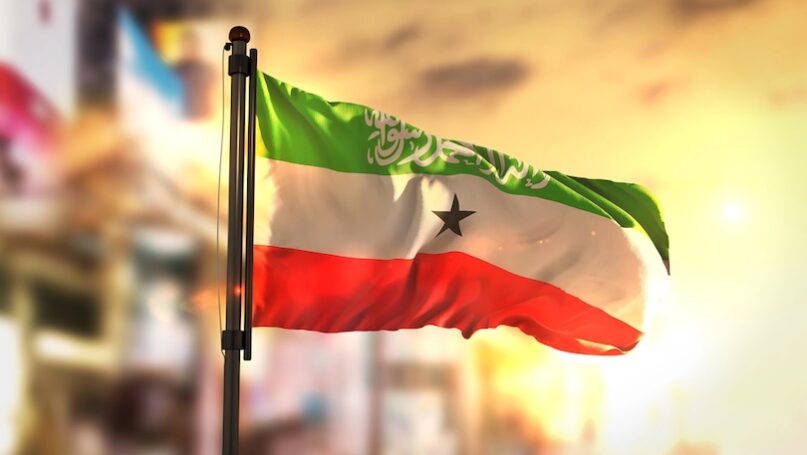
Upon gaining independence from British colonial rule on 26 June 1960, Somaliland received full recognition from 35 states, including all permanent members of the UN Security Council. On 1 July 1960, it merged with Italian Somalia. After a decade-long armed struggle, Somaliland withdrew from the union and unilaterally restored its sovereignty. Following the dissolution of Somalia’s central state in early 1991, all communities in Somaliland voluntarily entered negotiations, ceased hostilities, and ultimately forged an inclusive democratic state. Between 1991 and 1997, seven major peace conferences were held across Somaliland. All key decisions, except for the selection of the president, were reached by consensus. Somaliland’s peace and state-building trajectory was entirely locally driven, with no external involvement in the political process.
By contrast, Somalia became an UN-led experiment in Post-Cold War peace and state-building. Despite – or perhaps because of – the extensive external intervention that shaped Somalia’s externally driven process, repeated efforts to construct a viable and legitimate state have failed. The first municipal elections since the 1960s were held in Mogadishu earlier this year. Even these were highly contested, confined to the capital, and boycotted by the opposition. In contrast, since 2001 Somaliland has conducted four free and fair multiparty general elections, characterized by peaceful transfers of power.
In early 2024, a memorandum of understanding between Somaliland and Ethiopia was announced, granting the latter access to the Red Sea in return for formal recognition of the former. Reigniting hopes for recognition, prominent Republicans have expressed support for Somaliland. Notably, on 14 August, U.S. Sen. Ted Cruz released a press brief urging President Trump to recognize Somaliland. For Cruz, recognizing Somaliland – a close ally of Taiwan – is vital to counter China’s influence. On 26 December 2025, Israel became the first state to formally recognize Somaliland, with Israeli Prime Minister Benjamin Netanyahu announcing that Somaliland would join the Abraham Accords.
While the specific details of the deal between Israel and Somaliland remain unclear, it is unlikely that Israel’s actions are driven by a desire to reward Somaliland’s democratic record. More plausibly, Israel is motivated by concrete geostrategic interests, such as securing a foothold in Somaliland from which it could counter the threat posed by the Iran-aligned Houthi rebels in Yemen. Israel’s move also fits a broader trend in which global and regional powers prioritize security competition and project influence beyond their borders.
Somaliland sits in the Horn of Africa, boasts an 800-kilometer coastline, and possesses proven oil reserves and deposits of rare minerals. Although Somalia has condemned Israel’s move as a violation of sovereignty and international law, it has itself entered an oil and gas exploration agreement with Turkey and hosts a major Turkish base. According to sources in Somaliland, additional countries are expected to follow Israel in formally recognizing Somaliland. Although the United States has yet to issue a definitive statement, U.S. military and diplomatic delegations are currently in Somaliland, and Washington has long shown interest in establishing a base in the port city of Berbera.
Some commentators argue that recognizing Somaliland could destabilize the Horn of Africa, undermine counterterrorism efforts, and encourage separatist movements across the continent, rather than positively contributing to Somaliland’s development and stability. These claims, however, do not withstand scrutiny.
Numerous Muslim and Arab countries, including Saudi Arabia, Egypt, and Jordan, have developed strong economic and diplomatic ties with Israel without experiencing a surge in extremism. The absence of terrorist groups such as Al-Shabab and ISIS in Somaliland is principally due to the presence of a functioning state. Al-Shabab continues to control large portions of southern Somalia, making it imprudent for Mogadishu to sever ties with the United States in retaliation for recognizing Somaliland or for supporting Israel’s move. In reality, there is little Mogadishu can do beyond issuing condemnations. The claim that recognizing Somaliland would embolden secessionist movements across Africa overlooks the fact that Somaliland enjoyed de jure recognition of sovereignty prior to merging with Somalia. Recognizing Somaliland is therefore a restoration of the borders established during colonial rule, making Somaliland a unique legal case.
Commentators have asserted that China has previously sought to destabilize Somaliland due to its pro-Western and pro-Taiwan strategic orientation. Meanwhile, Egypt, Turkey, and Djibouti have voiced strong support for Somalia, condemning Israel’s move. Djibouti, which controls a near monopoly on the import and export trade for over a hundred million landlocked Ethiopians through its ports, faces a strategic challenge from a recognized Somaliland. Additionally, Djibouti wields considerable influence in Somaliland’s far western region, home to the Issa sub-group, which also dominates the political landscape in Djibouti.
In sum, Israel’s move to spearhead the re-recognition of Somaliland is a watershed moment that marks a potential point of no return in Somaliland’s quest for de jure sovereignty. However, Somaliland faces both immediate and long-term challenges that will be critical to how its recognition efforts unfold. In the short term, it must carefully balance the pursuit of diplomatic recognition with deterring hostile external meddling. In the long term, it will face the consequences of having alienated China and the potential Security Council and recognition roadblocks this may signal.
Further Reading on E-International Relations
- Opinion – Human Rights Concerns as Somaliland Seeks International Recognition
- Opinion – Is Somaliland Defying the Odds, or Are the Odds Based on a Flawed Premise?
- Somaliland’s Democratic Journey
- Towards a Proper Understanding of Somaliland’s Success
- From Clan to Clannism in Somaliland: A Rejoinder
- Opinion – Australia’s Recognition of Palestine as a Catalyst