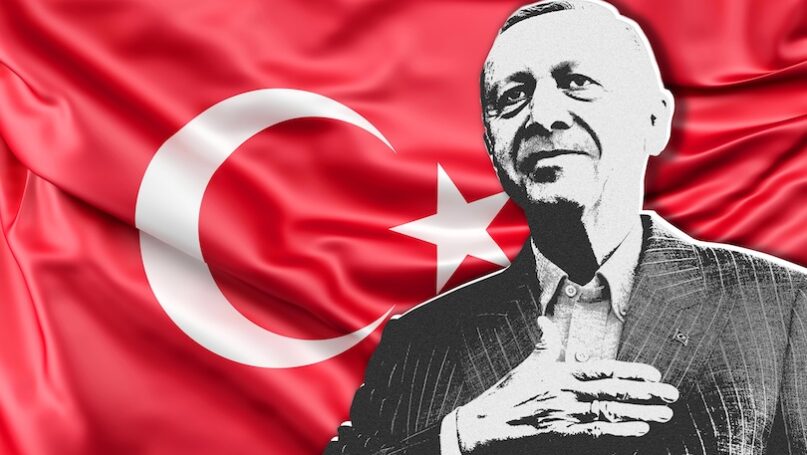
Neo-Ottomanism is an ideology and identity project championed by Turkey’s conservative and Islamist actors that seeks to bring Islam and Ottoman history back into the center of political and social life. It aims to redefine both societal and state identity not along narrow ethnic lines, but as civilizational—rooted in a shared Ottoman–Islamic heritage that transcends territorial or purely national definitions. Thus, neo-Ottomanism is fundamentally grounded in nostalgia and the political needs of contemporary Turkey, seeking to reconstruct the future through a selectively curated and mythologized Ottoman past. Its central objective is to transform both state and societal identity by delegitimizing the founding philosophy of the Republic—Kemalism—and replacing it with a civilizational framework rooted in Ottoman–Islamic memory. Kemalism was a secular nation-state project modeled explicitly on Europe: it sought to overcome imperial collapse, religious pluralism, and perceived backwardness by imitating European political forms, legal systems, and cultural norms. Through laicism, territorial nationalism, and Western orientation, Kemalism aimed to create a homogenous, modern nation that would secure recognition and survival within a Eurocentric international order.
Neo-Ottomanism challenges the Kemalist secular nation-state legacy by advancing the idea of the civilizational state, in which political legitimacy derives not from republican institutions or popular sovereignty, but from history, religion, culture, and a presumed continuity of civilizational mission. This vision is operationalized through civilizational state–centric nationalism, a form of nationalism that redefines Turkish identity around Ottoman–Islamic civilization rather than secular citizenship. Since 2003, this discourse has enabled Recep Tayyip Erdoğan to marginalize Kemalist secularism, centralize power, and legitimize a neo-patrimonial, sultanic mode of governance. Domestically, neo-Ottomanism operates as a surrogate for Islamism by embedding Islamic norms within state identity; internationally, it underpins an expansive foreign policy aimed at extending Turkey’s influence across former Ottoman geographies and Central Asia. Understanding this ideological reversal requires first examining Kemalism itself as a nation-building project shaped by fears of fragmentation, backwardness, and exclusion from Europe.
From Kemalist Westernism to Status Frustration
The Sèvres Syndrome (August 10, 1920) stands as the most devastating blueprint for the dismemberment of the Ottoman Empire and remains one of the deepest psychological wounds in Turkish national memory. Drafted at the end of World War I by the victorious Allied powers, Sèvres effectively abolished Ottoman sovereignty and partitioned the empire into zones of occupation and influence. Large portions of Anatolia were slated for Greek annexation, including İzmir and much of Western Anatolia; an Armenian state was to be established in the east under U.S. arbitration; and a possible autonomous or independent Kurdistan was envisioned in the southeast. The Straits were to be placed under international control; Istanbul itself was threatened with permanent Allied occupation; and the remaining “Ottoman” territory was reduced to a small, landlocked, economically unviable state surrounded by foreign mandates. For ordinary Turks—already exhausted by a decade of war—Sèvres represented not just a punitive treaty but the complete erasure of political existence. By dividing Ottoman lands, subordinating sovereignty to foreign powers, and treating the state as illegitimate, the treaty effectively made the empire unable to govern itself independently. The Ottoman heartland would have become a patchwork of protectorates, leaving its people without a recognized political authority and marking the end of Ottoman political life as it had been known.
This moment of near-annihilation created a collective trauma later termed the “Sèvres Syndrome”: a pervasive fear that foreign powers still seek to partition Turkey, undermine its sovereignty, or manipulate its minorities. The War of Independence (1919–1922), led by Mustafa Kemal, is therefore remembered not only as a military victory but as a civilizational resurrection that saved Anatolia from political extinction. The Lausanne Treaty of 1923, which replaced Sèvres, became sacralized as a foundational act of national salvation—proof that Turkey had reversed its historical humiliation and reclaimed dignity. Yet the trauma of Sèvres did not disappear. It produced a powerful but anxious nation-state that viewed threats through the lens of potential dismemberment, fusing national security with existential fear. Suspicion of great-power imperialism, vigilance toward ethnic separatism, and sensitivity to Western tutelage became core components of the Republican identity.
Kemalist secular nationalism emerged from the ruins of empire as a radical civilizational reorientation. The new Republic sought to replace an Islamic-imperial identity with a secular, territorial nation-state anchored in the Turkish language, rationalist modernity, and alignment with “contemporary civilization,” meaning Europe. Independence (bağımsızlık) and Westernization were seen as mutually reinforcing: only by internalizing Western norms, institutions, and technologies could Turkey secure true sovereignty and avoid a repeat of Ottoman dismemberment. The Ottoman past was recoded as a history of decline and humiliation, while the Republic’s founding war and the Lausanne Treaty were sacralized as moments of salvation. Turkey entered NATO and pursued membership in nearly all major European institutions out of a deep-seated anxiety about exclusion from the Western camp and a persistent fear of partition by the Western powers. Integration with the West was understood as a strategy of survival as much as of modernization: by anchoring itself institutionally within the Euro-Atlantic order, Turkey sought to secure recognition as a modern and equal member of the Western family and to insulate itself from the historical trauma of abandonment, intervention, and territorial dismemberment.
Yet over time, Turkey’s Western-centered strategy generated deep frustrations. During the Cold War, it served as a frontline NATO ally valued primarily for its strategic geography rather than its political voice, with minimal influence over alliance decision-making. The pursuit of EU membership since 1964 proved even more disheartening. Decades of association agreements, legal reforms, and formal accession talks beginning in 2005 ultimately stalled, leaving Turkey in a prolonged limbo. Many Turks came to view the obstacle not as technical or procedural, but civilizational: Europe’s vision of “Europeanness” was constructed in opposition to Islam, and by emphasizing secularism and Western norms, Europe implicitly excluded Turkey from full recognition as a European state. The EU’s exclusion of Turkey had far-reaching ideological consequences. By denying Turkey full membership, Europe effectively undermined the credibility of the pro-Western elite who had long argued that modernization, secularism, and institutional alignment with Europe would secure Turkey’s place within the Western world. This exclusion took the rug out from under that worldview and created a powerful opening for Islamist actors to advance their counter-narrative: that the EU was not a universal, civic project but a Christian civilizational club that would never truly accept a Muslim-majority country like Turkey. In this sense, European rejection did not merely stall accession; it actively legitimized anti-Western Islamism by transforming exclusion into proof of civilizational discrimination, thereby weakening Turkey’s Westernist consensus and deepening its identity crisis.
This combination of strategic dependence within NATO and civilizational exclusion from Europe did not by itself create neo-Ottomanism, but it amplified its resonance and allowed it to dominate the public imagination. European rejection, in particular, highlighted neo-Ottomanism as an alternative civilizational framework, framing Turkey not as a subordinate Western ally or a failed EU candidate, but as the rightful heir and guardian of Ottoman–Islamic civilization. Within this narrative, Turkey could assert historical dignity, moral authority, and regional influence, offering a symbolic and ideological response to the frustrations of Western-centered strategies while redefining domestic and international identity along civilizational lines.
Islamist Counter-Narratives and the Reopening of the Past
Those who rejected the Westernization reforms of Mustafa Kemal developed a counter-narrative to delegitimize the founding philosophy of the Republic and they transformed Islam into an oppositional identity to mobilize the masses. This counter ideology gradually moved to the public sphere. The Cold War conditions and Turkey’s democratization after 1950 opened the national narrative to sustained contestation, weakening the Kemalist narrative’s monopoly that defined Turkey as a secular, Western-oriented nation-state. Islamist intellectuals such as Necip Fazıl Kısakürek and Sezai Karakoç advanced a rival historical imagination that did more than criticize Kemalist westernization; it challenged the very foundations of the Republic. In this alternative reading, Turkish identity was portrayed as historically and essentially Muslim, while secularism appeared as an alien, Western imposition that had severed society from its authentic civilizational roots. Kemalist reforms were reinterpreted not as emancipation from backwardness, but as cultural submission to Europe. To legitimize this counter-history, Islamist intellectuals elevated alternative heroes—Ottoman sultans, especially Abdülhamid II—and foregrounded memories of religious suffering, from headscarf bans to restrictions on mosques and Qur’anic education. By the time the AKP came to power in 2002, this narrative resonated widely as the voice of a long-silenced conservative majority, allowing Islamists to present themselves simultaneously as democratizers and as restorers of lost civilizational dignity.
This counter-narrative rehabilitated the Ottoman past. Far from being a decrepit relic, the empire was reimagined as a golden age of justice, faith, and civilizational leadership. The abolition of the caliphate and the break with Ottoman institutions were framed as betrayals of a millennial Islamic mission. The Republic’s founding moment—War of Independence and Lausanne—was thus stripped of its sacred aura and presented as a limited, even hollow, victory that saved borders but sacrificed soul.
Under Erdoğan’s rule, this counter-narrative hardened into a new orthodoxy. The “New Islamized Turkey” cast itself as the true continuation of Ottoman-Islamic civilization, relegating Kemalism to a deviant interlude and deploying a story of victimhood and destiny to legitimize centralization and repression.
Neo-Ottomanism as Civilizational State Nationalism
Civilizational state nationalism is a form of nationalism in which a state derives its identity and legitimacy not primarily from ethnicity, citizenship, or modern territorial boundaries, but from a perceived continuous civilizational heritage—a shared history, culture, religion, or philosophical tradition. Such states imagine themselves as the political and moral carriers of a civilization that transcends contemporary borders, often projecting influence over territories that historically or culturally belonged to that civilization. Examples include India, Russia, and China, where historical memory, culture, and moral narratives are invoked to justify policies and assert claims that do not necessarily align with current nation-state borders. Civilizational state nationalism thus combines domestic identity-building with foreign policy ambitions, framing the state as the protector and promoter of a civilizational space, and using this imaginary map to legitimize strategic, cultural, or political objectives beyond conventional territorial sovereignty.
Neo-Ottomanism, as a form of civilizational-state nationalism, does not seek the literal restoration of Ottoman territorial boundaries, but instead projects a civilizationally framed ethno-religious identity rooted in a selective imperial memory. By “selective imperial memory,” I mean that the Ottoman past is curated and mythologized: moments of glory, moral authority, and imperial centrality are highlighted, while episodes of decline, internal conflict, or oppression are downplayed or ignored. This constructed memory emphasizes a narrative of justice, religious leadership, and civilizational influence, presenting the empire as a morally and culturally superior actor on the global stage.
Domestically, this selective memory allows neo-Ottomanism to synthesize competing identities: it reconciles the Kemalist rupture with the Ottoman-Islamic past while taming Islamist impulses by embedding the ummah (global Muslim community) imagination within the framework of a sovereign Turkish state. The result is a civilizational identity that legitimizes centralization, elevates Sunni-Islamic culture as the moral core of Turkishness, and fosters public attachment to a historical narrative of dignity and continuity. Internationally, selective imperial memory supports Turkey’s ambitions by framing its foreign policy as the natural extension of its civilizational role. Former Ottoman territories, Turkic regions in Central Asia, and Muslim-majority areas in the Middle East and Balkans are cast as part of Turkey’s civilizational sphere of influence. This narrative justifies assertive, multi-regional engagement—military, economic, and cultural—under the guise of protecting shared heritage, promoting stability, and asserting historical centrality. By mobilizing a curated imperial past, Turkey positions itself not simply as a regional power but as a civilizational actor, claiming moral authority, historical legitimacy, and strategic autonomy in both domestic governance and international relations.
Neo-Ottomanism also redefines who counts as “the people.” It privileges a Sunni-Turkish core and treats secularists, Kurds, Alevis, and non-Muslim minorities as conditionally included at best. Those who contest the neo-Ottoman story are easily branded as internal enemies or Western agents. In this sense, neo-Ottomanism fuses civilizational state nationalism with populism: Erdoğan is presented as the embodiment of the authentic people and their civilizational mission, while opponents are stigmatized as traitors to a glorious past and its promised restoration.
This synthesis is dramatized in symbolic acts and cultural production. Erdoğan’s constant references to Mehmed the Conqueror, the lavish celebration of the 1453 conquest, and above all the reconversion of Hagia Sophia into a mosque in 2020 perform a repudiation of Kemalist secularism and a reassertion of Ottoman continuity. Turkish television series such as Diriliş: Ertuğrul (Resurrection: Ertuğrul) and Payitaht: Abdülhamid (The Capital: Abdülhamid II) have played a central role in supplying a heroic genealogy of pious Muslim warriors defending the state against Crusaders, Byzantines, internal traitors, and Western conspiracies. The neo-Ottoman repertoire is embedded in schools, museums, media, and the religious bureaucracy. Curricula emphasize Ottoman achievements and Islamic heritage; restored mosques and imperial sites function as lieux de mémoire; the Diyanet, with an expanded budget and global reach, preaches a fusion of religion, nationalism, and state-led civilization. Over time, this mythscape becomes common sense, lowering the cost of mobilization around imperial symbols and narratives.
These dramatizations deliberately map contemporary political anxieties—Western encirclement, civilizational hostility, and national victimhood—onto a mythologized past. Produced with substantial state support and openly promoted by the Erdoğan government, these series function as cultural instruments of neo-Ottomanism. They reframe the Ottoman Empire primarily as an Islamic empire locked in perpetual struggle with Europe, systematically downplaying its cosmopolitan, pluralistic, and imperial-administrative dimensions. Non-Muslim subjects, legal hybridity, and pragmatic diplomacy are marginalized in favor of a moralized narrative of Islamic unity and righteous resistance. Through this state-funded popular culture, Ottoman history is not merely remembered but reconstructed—transformed into a civilizational drama that defines Turkish identity in opposition to Europe and legitimizes contemporary Islamist governance by presenting Erdoğan’s rule as the latest chapter in an unbroken struggle for Islamic sovereignty and dignity.
Socio-Economic and Geopolitical Conditions of Emergence
The rise of neo-Ottomanism is closely linked to post–Cold War transformations. Domestically, neoliberal reforms and export-led growth from the 1980s empowered a new, religiously conservative Anatolian bourgeoisie that sought political recognition and a cultural project reflecting its values, in contrast to the secularist elitism of traditional Kemalist Istanbul and Ankara. Neo-Ottomanism provided a dignified historical and civilizational frame for this emerging class. Regionally, the collapse of Soviet power, the U.S. invasion of Iraq, the Arab uprisings, and the fragmentation of order in Syria and Libya created a fluid environment—a geopolitical landscape marked by weak or absent central authority, shifting alliances, and contested borders. Power vacuums in the Balkans, the Caucasus, and the Middle East offered Turkey opportunities to expand influence in ways previously constrained by stable state structures. Globally, the erosion of unipolarity and the rise of multipolarity gave middle powers like Turkey greater room to maneuver.
In this context, neo-Ottomanism supplied both a narrative and a vocabulary to legitimate Turkey’s activism. It reimagined post-Ottoman territories as a natural civilizational sphere, recoding colonial-era borders as artificial divisions. This ideological framework directly informs Turkey’s civilizational foreign policy, providing historical and moral justification for assertive engagement across former Ottoman lands and the broader Muslim world. Rather than acting as a conventional regional power, Turkey is cast as a civilizational state with responsibilities extending from the Balkans to North Africa and from the Caucasus to the Gulf, linking domestic identity and political legitimacy to multi-regional strategic activism.
Civilizational Nationalism and Foreign Policy
Foreign policy is where the civilizational state ambitions of neo-Ottomanism are most visible. Ahmet Davutoğlu’s doctrine of “strategic depth” argued that Turkey’s history and geography endowed it with natural influence across multiple regions. The task was not to escape the nation-state but to transcend its passivity, transforming Turkey from a “flank state” into a pivotal pole in a multipolar order. In practice, this took the form of multi-directional activism: military operations in Syria and Iraq; involvement in Libya; assertive postures in the Eastern Mediterranean; and decisive support for Azerbaijan in the 2020 Nagorno-Karabakh war. These interventions were justified not only in terms of security or interest but as responsibilities inherited from imperial memory—protecting Sunni Arabs, defending Turkic kin, stabilizing former Ottoman provinces. The rapid development of an indigenous defense industry—especially drones like Bayraktar TB2—became both a material tool and a symbolic marker of autonomy. Drone exports to Ukraine, Azerbaijan, and various African states elevated Turkey to the status of regional security provider, converting technological gains into diplomatic leverage.
Soft power instruments amplified these civilizational geopolitics. Turkish Cooperation and Coordination Agency (TİKA)’s development projects, mosque restorations in the Balkans, educational scholarships, and the global circulation of Turkish TV serials created a cultural sphere that loosely overlaps with the old imperial geography. The Directorate of Religious Affairs (Diyanet)’s international activities and Ankara’s vocal championing of the Palestinian cause, especially around Jerusalem, reinforced Turkey’s claim to moral leadership in the Muslim world. At the level of grand strategy, neo-Ottomanism underwrites a policy of hedging and diversification. Turkey maintains its NATO membership while purchasing Russian S-400 missiles; it quarrels with the EU, yet deepens economic ties; courts Qatar and other Gulf states while engaging Russia and Iran. This multi-vector policy is presented as the behavior of a self-confident civilizational state with great-power sensibilities, no longer willing to accept a rigid pro-Western script.
Neo-Ottomanism as Authoritarianism
In Erdoğan’s hands, neo-Ottomanism functions as a political technology that converts historical grievance and contemporary Muslim suffering into diplomatic and symbolic capital. By repeatedly positioning Turkey as the defender of Muslims—from Gaza to Myanmar—Erdoğan does not seek to overturn the international state system, but rather to recode it in civilizational terms. The selective invocation of Muslim victimhood allows him to present himself as a moral voice of Islam, a leader who speaks where others remain silent. This posture expands Ankara’s recognition base across the Muslim world, strengthens Erdoğan’s claim to transnational Islamic leadership, and simultaneously increases Turkey’s bargaining power vis-à-vis Western partners by mobilizing moral authority as a strategic resource.
Domestically, neo-Ottomanism functions as a symbolic substitute for declining performance and eroding democratic legitimacy. As economic crises deepen, inequality widens, and corruption becomes systemic, the government increasingly relies on the civilizational prestige of a reimagined Ottoman past to fill the legitimacy vacuum. Instead of material prosperity or institutional competence, the regime now offers emotional rewards: pride in historical grandeur, gestures of religious revival, and a sense of participating in a national mission larger than the hardships of daily life. In this narrative, symbolic victories—such as the reconversion of Hagia Sophia, the glorification of Ottoman sultans, or lavish celebrations of the 1453 conquest—serve as stand-ins for genuine achievements. Prestige replaces prosperity; spectacle substitutes for stability.
At the same time, neo-Ottomanism seeks to redefine the nation itself. Rather than the secular, territorially bounded, civic identity envisioned by Kemalism, the regime promotes a civilizational identity rooted in Sunni Islam and Ottoman memory. This recentering of Islam as the moral and cultural foundation of Turkishness serves a dual purpose. First, it presents Islam as the imperial glue capable of overcoming internal fractures—particularly the Kurdish question. By casting Kurds as fellow Muslims within a shared Ottoman-Islamic civilization, the government attempts to delegitimize Kurdish demands for autonomy or recognition as “un-Islamic,” “separatist,” or manipulated by foreign powers. The Kurdish struggle for cultural and political rights is recoded as a threat to imperial continuity rather than a modern democratic issue. In this way, neo-Ottomanism reframes diversity not through democratic pluralism but through an older imperial logic in which Muslim subjects were unified under a common religious order.
Second, this redefinition strengthens Erdoğan’s personal authority. As economic mismanagement, inflation, and corruption scandals erode the credibility of the governing party, Erdoğan increasingly presents himself as the leader chosen to restore the dignity of a once-great civilization. His legitimacy becomes tied not to present-day governance but to the promise of historical redemption: he alone is depicted as capable of protecting the nation from renewed foreign plots, internal division, and another “Sèvres” moment. By fusing his political survival with the nation’s destiny, Erdoğan transforms criticism of his rule into an attack on the entire civilizational project.
In this sense, neo-Ottomanism is less a coherent ideology than a politics of emotional compensation. It defines itself primarily in opposition to its Kemalist “other,” deriving meaning not from positive principles or internal coherence, but from a selective, constructed memory of the Ottoman past that bears little relation to historical reality. Its power lies in mobilizing emotions rather than reason: it converts national frustration, status anxiety, and economic insecurity into symbolic pride, framing domestic failures as noble sacrifices on the path to civilizational revival. Society is cast as the heir of an uninterrupted imperial mission, while dissenters are presented as traitors or outsiders. Where economic performance and democratic legitimacy falter, neo-Ottoman storytelling substitutes emotional resonance for institutional capacity, enabling Erdoğan to sustain authority not by addressing concrete problems, but by redefining what it means to be Turkish and who possesses the right to lead the nation. Its appeal rests less on rational argument than on the affective power of nostalgia, grievance, and imagined historical destiny.
Conclusion: Restorative Nostalgia in a Hierarchical Order
Neo-Ottomanism is not a literal blueprint for reconstructing an empire, nor merely a romantic longing for lost territories. It is a modern, nationalist, and strategic project that weaponizes imperial memory to renegotiate Turkey’s place in an unequal international system. By reframing the Ottoman past as a resource for autonomy and leadership, it seeks to resolve a century-long tension between the vulnerability of nation-states, imperial memory, and Western-centered hierarchies.
Where Kemalist nationalism promised security and prestige through Westernization and rigid territorial nationalism, neo-Ottomanism offers an alternative route: civilizational state nationalism anchored in a reimagined imperial heritage and expressed through multi-regional activism. It aspires to transform Turkey from a peripheral ally and frustrated EU candidate into an autonomous civilizational actor that authors, rather than merely endures, regional history.
Whether this project can be sustained is uncertain. Symbolic capital cannot indefinitely substitute for economic performance or institutional robustness, and the privileging of Sunni-Turkishness risks deepening internal fractures. Yet whatever its future, neo-Ottomanism already represents the boldest rearticulation of Turkish state identity since 1923: a civilizational state nationalism of restorative nostalgia, seeking not the return of empire, but the restoration of imperial status in a hierarchical world.
Notes
NB: I am grateful for the insightful comments and suggestions offered by Professors Karima Laachir, Tomohiko Uyama, Fumiko Sawae, and Hiromi Komori.
Further Reading on E-International Relations
- Opinion – Beyond Neo-Ottomanism in Turkey’s Syria Strategy
- Civilizational Nationalism: Concept, Cases, and Global Implications
- Opinion – How the West Can Prepare for a Post-Erdogan Era in Turkey
- Pluralism vs. Ultra-Nationalism: The Real Cleavage Behind Turkey’s Elections and Populism’s Rise
- Deciphering Erdoğan’s Foreign Policy after Turkey’s 2023 Elections
- Opinion – The Plain Sight Threat to NATO, Turkey, and Turanism