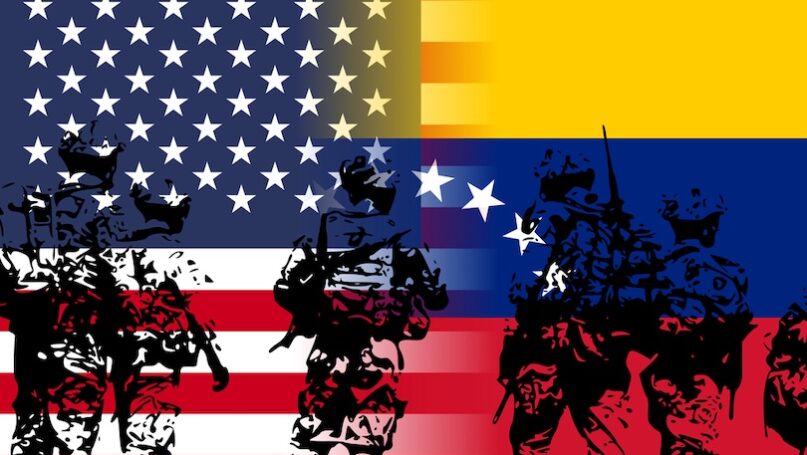
The new year arrived with a Latin American capital city invaded. Overnight, United States Special Forces, under cover of the early hours’ darkness and backed by an amphibious military force, captured the head of state, acting on drug trafficking charges. As the target state slides into turmoil, the United States president announces on live television: a dictator has been, at last, “brought to justice”. Such scenes unfolded in 1989, in Panama. And once again in 2026, in Venezuela. The pursuit of general Manuel Noriega by President George Bush on January 3, 1989, was the latest US intervention in Latin America until January 3, 2026, when Nicolas Maduro was captured alongside his wife, Cilia Flores, following President Donald Trump’s orders. Separated by 35 years, those events, on the surface, look strikingly similar. However, they represent distinct patterns of US foreign policymaking.
Bush’s assault on Panama City was not the prelude to an era of US interventionism in Latin America. The following decade (in the words of Bush, a “new world order”) was marked by a multilateral renewal and by a diplomatic rapprochement between Washington and re-democratized Latin American polities.
In contrast, the US profile in Latin America in 2026 looks smaller. No longer the biggest trading partner or investor in a region now economically intertwined with a rising China, the US also no longer extracts benefits from previous waves of re-democratization. After the early 2000s “Pink Tide”, different brands of authoritarian regimes established across Latin America. Symptomatically, Trump’s invasion of Caracas unfolded under a new National Security Strategy, which recognized the limits of US foreign policymaking in the 21st century, as well as its reduced influence. The document envisions a more prominent US role in Latin America, albeit in a selective manner: “the affairs of other countries are our concern only if their activities directly threaten our interests“.
The recurring question of how US interests intermingle with patterns of world order sets Bush’s course of action at the end of the Cold War apart from Trump’s Make America Great Again (MAGA). Despite recurring attempts by the Trump administration to draw parallels between its decisions and pivotal moments from previous ages of American foreign policy (such as the significance of January 3), there are more differences than commonalities between the patterns of action of those Republican administrations. Drawing from previous episodes in Trump’s foreign policy, this contrast becomes more pronounced – and more relevant for understanding current world politics.
Before attacking Venezuela, Trump claimed the role of a peacemaker in the Middle East by sponsoring the Abraham Accords between Arab states and the state of Israel. However, this peacemaking portfolio was tainted by his support for Israeli-led genocide in the Gaza Strip and also by military actions against Iran. Apart from security issues, Trump got notoriety for imposing trade taxes on hundreds of states in April 2025, claiming that the US was at the losing end of trade dynamics since the end of the Cold War.
The imposition of unilateral trade tariffs and recent US actions in the Middle East share the same foreign policy logic that underpinned the assault on Venezuela – a different logic than the one that presided over the end of the Cold War.
After the breakdown of negotiations over the status of the Iranian nuclear program the military escalation between Israel and Iran culminated in a 12-day war in June 2025, during which the US attacked Iranian nuclear installations in Fordow, Natanz, and Esfahan. Such attacks were justified in terms of Iranian non-compliance with international norms. Afterwards, the US refrained from further military actions. On the surface, the narrative of the attacks on underground Iranian nuclear facilities mobilized older tropes, employed during the 1991 Gulf War – an era depicted in international relations as the unipolar moment of USA single-handled military hegemony on a global scale. By then, US president George Bush spoke of a new world order. Trump delved into this tradition to boost his own claims of making America great again. The MAGA movement, therefore, would represent a return to the immediate post-Cold War status quo (a nostalgic, or even reactionary move).
However, what looked like an analogy on face value loses appeal, as soon as we bring to the fold the normative underpinnings of world orders. The 1991 Gulf War was an outcome of the United Nations collective security system, triggered in accordance with international law after the 1990 Iraqi invasion of Kuwait. The new world order of US-led unipolarity, therefore, overlapped with a multilateral triumph, underpinned by diffuse reciprocity, making intensive use of international institutions. Consequently, foreign policy decisions undertaken by Donald Trump since his return to the White House do not represent nostalgic iterations of the unipolar moment. On the contrary. Under Trump, US foreign policy departed from the patterns of hegemonic stability established after 1945 and reinforced after the Cold War.
Instead of providing public goods to allied countries (such as sustaining international trade through international institutions), across 2025 Trump promoted a systemic beggar-thy-neighbor policy through trade tariffs, triggering a series of bilateral negotiations with target states. In that regard, the US assault on trade was favored by an institutional deadlock in the World Trade Organization. The same logic applies to Trump’s foreign policy decisions regarding multilateralism. By acting through normative loopholes, the US poses a sustained challenge to multilateral norms and institutions, already undergoing a pronounced decline across the 21st century.
This sustained character of Trump’s foreign policy decisions constitute a reversal of multilateral expectations after the end of the Cold War. However, this does not comprise a full-fledged assault on multilateralism. Rather, we got from the Trump administration a selective mix of acting through normative loopholes and employing international institutions to safeguard unilateral actions. This mix – in opposition to multilateralism’s diffuse reciprocity – can be labelled diffuse unilateralism. In Iran, for example, normative loopholes were employed for the pursuit of limited US interests – neither regime change, nor regularization of Iranian relations with Israel in terms of the Trump-led Abraham Accords. Similarly, in Gaza, the US-brokered ceasefires of 2025 (January and October) were endorsed by the UNSC, apart from regional organizations (the Gulf Council) and organizations of limited membership (the Organization of Islamic Cooperation). Previously, US actions in the region have been framed in terms of fighting terrorism.
Prior to the dramatic night of 3 January, the Trump encirclement of Venezuela was paved by claims of fighting drug trafficking. By invoking a transnational fight against illicit drug trade, the US government placed military actions outside the scope of the laws of war and, also, beyond the pale of US Congress’ authorization. After declaring the Venezuelan leadership masterminds of a drug cartel (“Cartel de Los Soles”) and labelling the criminal organization a foreign terrorist organization, Trump deployed the greatest naval contingent of US forces in Latin America since Cold War, followed by strikes on vessels departing Venezuela in international waters (more than 100 hundred target killings). The pursuit of tanker vessels departing Venezuela in December 2025 culminated with a naval blockade. Eventually, Nicolas Maduro was removed by US special forces on January 3, 2026. After coordinated US military attacks in three Venezuelan provinces, Maduro and his wife were taken into custody aboard warship USS Iwo Jima and then brought to trial in New York by plane.
As a pattern of action in foreign policy, diffuse unilateralism prescinds of existential threats and is not funnelled through institutional channels (both in terms of undermining international institutions and in terms of sidelining domestic bureaucracies). It does not represent a repudiation of multilateralism, insofar as it recurrently mobilizes multilateral norms and institutions for unilateral ends. Long-term alliances also fell by the wayside – as US allies in NATO and the European Union acknowledged, in the aftermath of trade tariffs and in the heat of the moment of the Russian war on Ukraine.
By avoiding institutional channels, binding agreements and shunning reciprocity, Trump extracts maximum short-term benefits from selective “deals” with smaller powers (such as trade deals with the European Union and the UK). On the other hand, bilateral deals are contingent, context-dependent and precarious affairs, hard to handle (such as the Trump-brokered ceasefires between Cambodia and Thailand or reiterated false starts between Russia and Ukraine). With a limited role for international institutions, effects of such deals are even harder to predict. Another potential difference between the events of January 3 regards the aftermath of intervention in Latin America. Panama fell in line with the crumbling dominoes of regional dictatorships across the 1980s. Venezuela, on the other hand, seems on the brink of a civil war between Maduro loyalists, the exiled Venezuelan opposition (led by Nobel Peace Prize Marina Corina Machado and Presidential candidate Edmundo González Urrutia) – and it is uncertain what interventionist role the US may play in any such scenario.
Looking wider as a final thought, undesired similarities may also ensue between Trump’s intervention in Venezuela and George W. Bush’s 2003 “mission accomplished” in Iraq. Bush Junior’s defeat in the war on terror lays a Damocles’ sword over the actions of the MAGA leader who promised an end to costly wars for US taxpayers. Trump’s triumph on January 3 2026, therefore, may constitute a Pyrrhic victory.
Further Reading on E-International Relations
- Opinion – What Has Trump Got Planned for Venezuela?
- Donald Trump: Reconfiguring Global Order
- America First, Humanity Second: Trump, MAGA, and American Imperialism Revisited
- Opinion – The Poverty of Rational Trumpism
- Opinion – Why Trump-Inspired Nationalists in Europe Can’t Stick Together
- US-Venezuela Relations in Light of the July Election