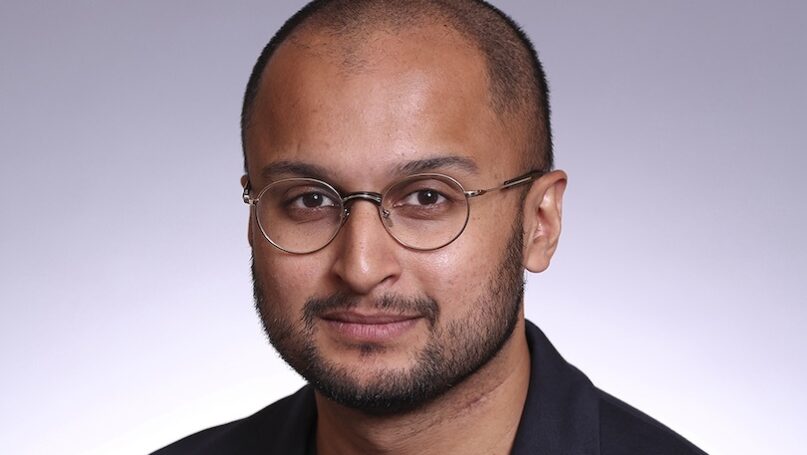
Ankit Panda is the Stanton Senior Fellow in the Nuclear Policy Program at the Carnegie Endowment for International Peace. His research interests include nuclear strategy, escalation, missiles and missile defense, space security, and U.S. alliances. He is the author of The New Nuclear Age: At the Precipice of Armageddon (Polity, 2025), Indo-Pacific Missile Arsenals: Avoiding Spirals and Mitigating Risks (Carnegie, 2023), and Kim Jong Un and the Bomb: Survival and Deterrence in North Korea (Hurst/Oxford, 2020). Panda is co-editor of New Approaches to Verifying and Monitoring North Korea’s Nuclear Arsenal (Carnegie, 2021).
Panda has consulted for the United Nations in New York and Geneva, and his analysis has been sought by U.S. Strategic Command, Space Command, and Indo-Pacific Command. Panda is among the most highly cited experts worldwide on North Korean nuclear capabilities. He has testified on matters related to South Korea and Japan before the congressionally chartered U.S.-China Economic and Security Review Commission. Panda has also testified before the U.S. Senate Subcommittee on Strategic Forces. Before joining Carnegie, Panda was an adjunct senior fellow at the Federation of American Scientists and a journalist covering international security. Panda is a frequent expert commentator in print and broadcast media around the world on nuclear policy and defense matters. He is editor-at-large at the Diplomat, where he hosts the Asia Geopolitics podcast, and a contributing editor at War on the Rocks, where he hosts Thinking the Unthinkable With Ankit Panda, a podcast on nuclear matters.
Where do you see the most exciting research or debates happening in your field today?
There are several, but I’ve been most enmeshed in two of late. The first concerns the future of U.S. nuclear strategy and force posture — specifically, whether the United States should expand its nuclear arsenal beyond the levels maintained over the past decade. Since the end of the Cold War, Washington has largely operated in an environment of relatively low nuclear risk. That perception is shifting. Many analysts now see a more dangerous landscape: a rapidly expanding Chinese arsenal, a Russia waging conventional war in Europe under the nuclear shadow, an established nuclear North Korea, and a fast-evolving technological context. In some ways, this is the latest iteration of a familiar question that has animated U.S. nuclear strategy since the Cold War: how much is enough to ensure credible deterrence? The issue remains unsettled. Policy choices in the coming years will determine the direction of U.S. nuclear posture, and even the decision not to expand capabilities, which I think is unlikely given current debates in Washington, would carry significant meaning.
The second debate concerns whether we are on the verge of a new wave of nuclear proliferation. This question has become especially charged in 2025 with the inauguration of a second Trump administration. Growing doubts about U.S. reliability are prompting some non-nuclear allies to openly discuss the possibility of developing their own nuclear capabilities. In my recent work, I’ve argued that a less proliferated world remains far preferable, not only for U.S. interests but also for the security of allies who may feel increasingly uncertain under a mercurial American president. That said, this debate will not disappear after the current administration. As one allied official recently put it to me, the deeper issue revolves around the kind of international actor the United States aspires to be in the decades ahead.
How has the way you understand the world changed over time, and what (or who) prompted the most significant shifts in your thinking?
Well, the world has changed, and as an analyst I try to update my views as new developments emerge. The biggest shift for me, having spent much of my career focused on cooperative risk-reduction measures including arms control, has been accepting that the 2020s simply don’t appear conducive to such efforts taking hold. I still believe these ideas have long-term value, but I’m now equally focused on contributing to policy solutions that are more tractable in the near term.
In that sense, my thinking has evolved: I’ve learned to compartmentalise what might pay off in the long run from what can meaningfully address today’s challenges. This shift has been shaped by ongoing debates and exchanges with peers and friends in the field, all of whom influence my perspective in subtle ways. I’ve always found that kind of friction productive; it sharpens ideas. Social media once offered a space for that kind of deliberation too, but unfortunately, that’s no longer the case. That said, my core values haven’t changed much.
Your recent book, The New Nuclear Age: At the Precipice of Armageddon, argues we are entering a new era of nuclear competition. From your view, what distinguishes this “new nuclear age” from earlier periods of nuclear history?
The book’s core argument rests on the convergence of several significant shifts in the global nuclear landscape that began, or sharply accelerated, around the start of this decade. These include the deterioration of relations among the three nuclear-armed great powers (the United States, Russia, and China), the collapse of much of the post–Cold War arms control architecture, the emergence of disruptive new technologies, and renewed pressures toward nuclear proliferation.
In short, nuclear weapons have returned to the centre of global statecraft in ways not seen since the Cold War. Not everything about this “new” nuclear age is truly novel, many old challenges have resurfaced (the U.S. pursuit of a “Golden Dome,” for example), but the combination of familiar and unprecedented dynamics marks a genuine inflection point. It compels political leaders, military planners, scholars, and the broader public alike to reconsider how nuclear weapons shape international relations today.
In Kim Jong Un and the Bomb, you analyse how North Korea has built its nuclear arsenal to ensure regime survival. How successful has Pyongyang been in creating a credible deterrent, and what risks does this pose for the wider region?
Looking back at what I said above about the choices facing the United States, North Korea faces its own version of the “how much is enough” dilemma. Unlike Washington, Pyongyang appears to have concluded — correctly, in my view — that even the demonstration of a somewhat unreliable nuclear delivery capability against the continental United States can produce meaningful deterrent effects. That’s essentially the point North Korea reached in 2017.
Arms control has been under strain, with major treaties collapsing and new ones proving difficult to negotiate. Do you see any realistic prospects for reviving arms control, or are we moving toward an era of unconstrained competition?
It’s difficult to argue that today’s political, diplomatic, and technological fundamentals are pointing toward imminent breakthroughs in arms control. That said, history reminds us that some of the most significant advances in this area have emerged from unexpected and dangerous moments — the Cuban Missile Crisis and the Soviet collapse being two prominent examples.
The essential prerequisite for meaningful arms control is mutual interest, and that is largely absent today. Still, I believe it’s crucial for our field to continue investing in research and ideas on arms control, verification, monitoring, and diplomacy. When political circumstances eventually shift, and they will, it will be vital to have both the intellectual groundwork and practical capacity ready. I don’t know when that opportunity will arise, but it’s improbable that it will never come.
Emerging technologies — such as hypersonic missiles, cyber tools, and artificial intelligence — are often described as destabilizing. Which of these do you think pose the greatest challenge to strategic stability, and why?
The answer is: it depends. The framework I often use to think about this question focuses on the survivability of nuclear forces and command and control. The key question is whether a given technology makes it easier or harder for a given nuclear state to secure its nuclear forces against a first strike. If it enhances survivability — as with the advent of naval nuclear propulsion and submarine-launched ballistic missiles during the Cold War — it contributes to stability. If it undermines survivability — for example, through a hypothetical, highly advanced AI-enabled global tracking system for mobile missiles and submarines — it falls on the destabilising side of the ledger. Much of this remains the subject of active debate, and several emerging technologies, such as artificial intelligence, may simultaneously empower both the proverbial “hiders” and “finders.”
You have argued that nuclear dynamics in Asia differ from those in the Cold War U.S.–Soviet context. What do Western analysts often misunderstand when they apply Cold War frameworks to Asia?
There’s a lot to unpack, but the three major differences concern multipolarity, the absence of an integrated multilateral alliance structure, and geography.
First, the Indo-Pacific nuclear environment is inherently multipolar. While it’s tempting to focus narrowly on U.S.–China nuclear dynamics in a potential conflict over Taiwan, one must also consider that North Korea represents an independent centre of nuclear decision-making, something without a direct parallel in Cold War Europe. The closest historical analogue might be how U.S. planners, after 1964, sought to incorporate “Red China” into nuclear war plans that were otherwise centred on the Soviet Union. Yet even that comparison falls short: today, American planners must contend with the possibility of opportunistic or simultaneous campaigns by multiple adversaries in the region.
Second, despite Beijing’s complaints about Washington attempting to build an “Asian NATO,” the United States is nowhere close to establishing such an alliance. Its treaty allies in the region do not share an integrated command structure, let alone a collective defence framework. This makes alliance management fundamentally different, though not necessarily more complex. Much of my recent work has focused on how U.S. Indo-Pacific allies think about escalation management in potential nuclear scenarios, particularly as several pursue advanced non-nuclear capabilities capable of producing strategic effects. South Korea stands out as a particularly interesting case here.
Finally, the Indo-Pacific’s vast maritime geography creates a theatre unlike the North Atlantic– or Arctic-oriented competition of the Cold War. A key challenge lies in the United States’ ability to sustain an intense conventional conflict across such an expansive region. That difficulty could, in turn, heighten the temptation to consider nuclear options as a means of offsetting conventional disadvantages, a logic not unfamiliar from certain Cold War dilemmas faced by the United States and NATO in Europe.
The Treaty on the Prohibition of Nuclear Weapons (TPNW) has been championed by many non-nuclear states. Do you see it having any practical impact on nuclear policy, or will it remain largely symbolic?
I think the disarmament movement will persist for as long as nuclear weapons exist. Those who believe that deterrence offers either a preferable — or at least the only feasible — way to coexist with nuclear weapons need to be realistic about that.
As for the Treaty on the Prohibition of Nuclear Weapons (TPNW), I expect its role to remain largely symbolic. In practical terms, as long as its member states maintain a do-no-harm approach toward the Nuclear Non-Proliferation Treaty (NPT), the broader non-proliferation regime should remain stable.
What is the most important advice you could give to young scholars of International Relations?
Read widely and be ready to change your mind. The world should — and will — surprise you.