The antinomical duality of biopolitical discourse in Agamben, Esposito and Arendt
In recent years the concept of biopower has become central to the study of the social and life sciences; with numerous interdisclipinary research networks established to investigate the reality of biopower, in relation to subjects as diverse as stem cell research, biotechnologies, and the War on Terror.
Amorality and Justice in Machiavelli’s Political Thought
Machiavelli’s political thought, transcends the levels of good and evil, and yet also embraces the notion of just political rule. In that sense, Machiavelli is indeed an amoral political thinker, though not on the basis of his expounding evil, but of his conception of the proper relationship between virtù, fortuna, and political statecraft.
Hobbes’ Leviathan: Innovation or continuation?
Hobbes’ views drifted away from the medieval natural law tradition, which dictates that natural law is provided by God and is a universally binding, authoritative and knowable good. Hobbes was aware of the fact that by excluding theism and universality his readers might condemn and ignore him as a radical, which as we know, proved to be the case.
Internationalized Sovereignty: Erosion or Extension?
The Kosovo intervention was the first in history to be justified solely on the basis of human rights breaches by a sovereign state within its territory, which were judged to present threat to international order. The bottom line remains that Belgrade’s sovereignty over Kosovo was first breached and then completely removed by the international community.
Decision Makers, Personal Belief, and Foreign Policy
Beliefs do matter in foreign policy as decision-making rarely conforms to demanding rational choice models. The power of ideas in international relations highlights particular human weaknesses, which might help understand a number of seemingly inexplicable decisions. Beliefs, however, are only one part of a wider framework.
The Iran/Contra Affair and the Nature of U.S. Democracy
The necessities of statecraft require some level of secrecy. Reagan abused this and the results were the Iran-Contra scandal. No President has used the office of the Executive in a more regal, imperial and ordained manner than Ronald Reagan. His use and abuse of the institution to pursue his own ideological doctrine raises the fundamental questionn of whether the concept of democracy is a viable one at all.
Yin or Yang? China and the Muslim world
In its autonomous region of Xinjiang China will decide upon its lasting and largely irreversible geopolitical trademark in entering the Global Balkans. Though it is narrow, the window of opportunity exists for China to take a credible leadership for regional peace and secure stable confidence.
Absolute and Relative Gains in the Real World
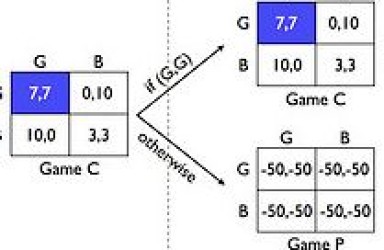
The real world is too complicated to be explained by absolute or relative gains alone. Both theories treat states as rational and unitary actors. Due to the diversity of interests, it is not easy to define a unitary national interest in some issues. Consequently, gains per se sometimes cannot be clearly stated.
The European Court of Justice: An Agent of Member States?
When they created the ECJ, the intentions of member states were to create a court which did not underestimate national sovereignty or national interest. However, the ECJ transformed the EU legal system, eventually blocking member state control over the ECJ.
Has the war on terror been an appropriate response to terrorism?
Terrorism has existed for centuries as a way of creating disruption and fear. Yet, to declare a war against it has created numerous questions as to how to fight this multifaceted idea. Individual groups do indeed hold ideological stances, just as legitimate political parties do, but to brand all terrorism and terrorists as the same would be incorrect.