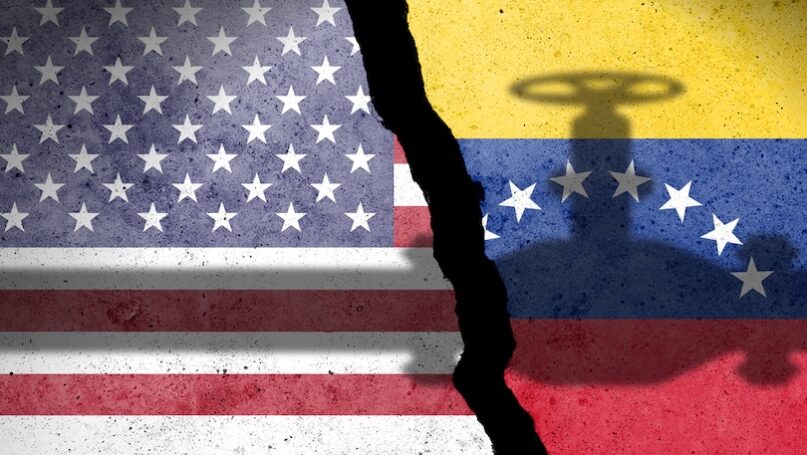
On January 3, 2026, Venezuela’s President Nicolás Maduro and his wife, Cilia Flores, were forcibly apprehended following a United States (U.S.) intervention in Caracas, Venezuela’s capital. The operation was accompanied by air and military operations affecting civilian and strategic sites and resulted in at least eighty deaths of local defenders and inhabitants. The stated justification was the enforcement of narcotics-related charges against Maduro and Flores in U.S. courts, with judicial proceedings initiated in New York (Security Council Report 2026).
The intervention was swiftly condemned by several countries, including Brazil, Chile, Colombia, Mexico, Uruguay, and Spain, because it violated fundamental principles of international law. These states argued that the operation breached the prohibition on the use or threat of force and undermined respect for state sovereignty and territorial integrity as enshrined in the United Nations (UN) Charter. They further warned that such actions establish a dangerous precedent for regional peace and security and pose serious risks to civilian populations (Ministerio de Relaciones Exteriores del Gobierno de Chile 2026a).
Although framed as a law-enforcement operation, the January 3 intervention was preceded by a marked escalation of U.S. military activity in the Caribbean Sea and the eastern Pacific throughout the second half of 2025. Under the banner of “combating drug cartels,” U.S. forces destroyed at least thirty-four vessels across twenty-eight incidents in international waters after September 2, 2025, despite the absence of publicly available evidence substantiating links to narcotics trafficking. These operations resulted in at least 110 deaths, occurring without judicial processes or a formal declaration of war by the U.S. Congress (Zegarra et al. 2025).
Tensions further intensified on December 16, 2025, when the U.S. president unilaterally imposed a “total blockade” on Venezuelan oil tankers entering or departing international routes. During that same month, at least two vessels were seized by U.S. forces on the grounds of alleged “illegal operations” (Ali et al. 2025; Matza 2025). This sequence of events marked a notable shift in the public narrative surrounding the Venezuelan-U.S. crisis, revealing that the central concern was less about narcotics control than about oil and energy security.
The Venezuelan episode of January 3, together with the expanding U.S. military presence in the Caribbean, thus points to a broader transformation in U.S. geopolitical strategy. Energy security renewed great-power competition, and the revival of interventionist doctrines increasingly converges in “strategic” areas of Latin America and the Caribbean (LAC). Recent signals within the U.S. National Security Strategy suggest that these actions are embedded in a broader effort to reassert hemispheric dominance in a region that has become progressively permeated by Chinese economic and political influence (Seal of the President of the United States 2025). This raises critical questions: Does Venezuela illustrate the extent of U.S. anxiety over its waning control in the Western Hemisphere? Furthermore, to what degree could similar dynamics unfold around other strategic energy and mineral resources across the LAC region?
This brief article argues that the assault on Venezuela represents a pivotal moment in the contemporary energy geopolitics of LAC. Energy geopolitics encompasses analysing the spatial distribution of supply and demand as well as the political tactics used to secure access to affordable, reliable, and sustainable energy. It emphasises the interactions between political entities and physical landscapes (Blondeel et al. 2024). By situating the 3 January episode within the intersection of fossil fuel supply chains, geopolitical rivalry, and revived doctrines of hemispheric control, as well as the return of hard U.S. power application in LAC, this essay seeks to illuminate the broader implications of this crisis for the region’s futures.
The Return of Hard Power: The U.S. Strategy under the second Trump period
As documented by Long (2016), several authors in the mid-2010s, including Mark Eric Williams and Noam Chomsky, identified a relative decline in U.S. influence across LAC. In parallel, the regional geopolitical landscape increasingly reflected the resurgence of Russia, the rise of China, and the growing presence of other extra-regional actors such as Iran. Notably, the last direct U.S. military intervention in LAC occurred in Panama in 1989 (Wolfe 2026). In the decades that followed, U.S. influence in the region was primarily exercised through soft power. However, as McKenzie (2024) observes, the second Trump administration signalled a decisive shift toward the reassertion of hard power, facilitated by the reallocation of national resources toward military and security expenditures in a context marked by the erosion of traditional soft power instruments.
Anticipating the Venezuelan episode of January 3, 2026, the Trump administration published the U.S. National Security Strategy in November 2025 (Seal of the President of the United States 2025), which identified the development of a highly resilient, efficient, and innovative energy sector as a central national objective. Within this framework, energy is not merely a driver of domestic economic growth but a strategic export industry predominantly fossil fuel–based and nuclear, intended to support domestic reindustrialisation and advances in research and innovation. This orientation largely sidelines, and in some instances explicitly rejects, climate commitments and mitigation agendas. At the same time, the strategy reaffirms the U.S. determination to preserve military supremacy and to guarantee unrestricted access to strategic regions and global commercial routes, reinforcing the tight coupling between energy policy and geopolitical power projection.
The same document explicitly revives the Monroe Doctrine, framing it as a guiding principle to “restore American preeminence in the Western Hemisphere” and to prevent non-hemispheric competitors from deploying forces, threatening capabilities, or acquiring control over strategically significant assets within what is described as “our Hemisphere”(Seal of the President of the United States 2025).
Yet the renewed prominence of the Monroe Doctrine predates Trump’s second term. For instance, General (former) Laura J. Richardson, Commander of the United States Southern Command, publicly described LAC publicly as the U.S. “backyard,” underscoring the region’s strategic relevance in terms of both security and access to pivotal resources (Atlantic Council 2023; Concordia 2022; Oipol & Oijust Official Channel 2022). These discursive assertions were accompanied by a series of high-level military engagements and visits to South American countries in 2023 and 2024. General Richardson’s visit to Argentina, including a stop in Ushuaia, exemplified this trend by highlighting local military initiatives aimed at securing maritime trade routes and reinforcing U.S. strategic presence in the Southern Cone (Embajada de los Estados Unidos en Argentina 2024).
Until 2024, the potential implicit plan lacked a specific artefact to materialise it, which Trump’s second administration ultimately operationalised through direct coercive action. Therefore, this U.S. shift in 2026 does not constitute an anomaly but rather a structural response to diminishing influence and heightened great-power rivalry, as Richardson previously indicated.
Oil in Latin America and the Caribbean
The explicit U.S. interest in Western hegemony, as well as the aspiration for regional and energy-focused geopolitical dominance, identified Venezuela as a prominent candidate for the first hard-power attack in several decades. This attribution is supported by various factors, including its strategic geographic location, the questioned government of Maduro, substantial proven oil reserves, and its ongoing strategic oil market relationships with Iran, Russia, and China, direct competitors of the U.S. Indeed, U.S. sanctions targeting the Venezuelan oil market have been implemented for several years.
Venezuela possesses the largest crude oil reserves in the world, with around 304 billion barrels as of 2022. This amount accounts for approximately 92% of South America’s aggregate reserves, which amount to 331.1 billion barrels. Other countries in the region with considerable oil reserves are Argentina (2,828 Mbbl), Brazil (14,856 Mbbl), Colombia (1,816 Mbbl), Ecuador (1,338 Mbbl), Guyana (9,000 Mbbl) and Mexico (6,059 Mbbl) (Castillo et al. 2023). In fact, Brazil, Guyana, and Argentina may serve as key proponents of the projected crude oil growth in 2026, worldwide, as their production has been increasing owing to the commissioning of new facilities in recent years (Hill 2025)
As a particular case, Guyana’s rise as an oil producer began in 2015 with offshore discoveries in the Stabroek Block, which have made it a rapidly growing oil frontier. Operations include the participation of U.S. companies. Since 2019, the extraction by an ExxonMobil-led consortium under a cost-recovery agreement has raised concerns about benefits, sovereignty, and long-term growth. While oil revenues have boosted Guyana’s economy, they have also attracted regional attention amid tensions with Venezuela (King 2025; Bakx 2025).
Unlike Guyana, the leading Venezuelan oil company is the state-owned Petroleos de Venezuela S.A. (PDVSA). It is a Venezuelan government-owned company that manages the domestic market for production and exploration facilities, linked to the Organisation of the Petroleum Exporting Countries (OPEC) (Manley et al. 2025). Yet, 70.5% of the 2023 total crude oil production was exported (IEA 2023), with China as the leading destination, followed by the U.S., the European Union (EU), India, and Cuba (Buchholz 2025).
It is estimated that oil and gas production in Venezuela has declined dramatically since 2014 due to U.S. sanctions on PDVSA and a lack of renewed infrastructure, which represents a pivotal threat to the domestic budget (Manley et al. 2025). Indeed, China and Iran have played important roles in sustaining Venezuela’s oil industry amid prolonged decline and U.S. sanctions. Tehran supplied essential inputs for transporting and processing Venezuela’s extra-heavy crude, enabling production increases in 2021 and 2022 and provided fuel, refinery materials, and technical personnel to restart idled facilities, while Chinese state firms such as CNPC offered technical assistance on oil fields and supplied catalysts and parts to revive refineries, helping to stabilise output and maintain export flows. In addition to being a major buyer of Venezuelan crude, China is an investor in its upstream and refining sectors, often absorbing significant volumes through state and intermediary channels, thereby deepening Beijing’s economic footprint in Caracas even as Washington tightened energy sanctions (U.S. Energy Information Administration 2024).
Another major oil producer in LAC, and a pivotal regional and global player, is Brazil. Over the past two decades, Brazil has consolidated a visible presence in international politics through active participation in multilateral forums such as the G20 and BRICS, of which it is a founding member alongside Russia, India, and China, thereby fostering both South–South and selective North–South cooperation (Zhebit 2019). Collectively, the BRICS countries represent approximately 3.3 billion people, accounting for over 40% of the global population, and generate around 37.3% of global GDP (PPP), with China contributing 19.05% and India 8.23%, compared to roughly 14.5% each for the U.S. and the EU. Beyond demographic and economic weight, the bloc is increasingly asserting itself as a central actor in global commodity markets (World Economic Forum 2024). Despite this growing multipolar engagement, Brazil has historically maintained close, enduring ties with the U.S., positioning it as a strategically ambivalent actor in contemporary hemispheric energy geopolitics (Santos Vieira de Jesus 2013; Long 2018).
The picture beyond oil: Critical minerals
As control over petroleum profoundly shaped geopolitics throughout the twentieth and early twenty-first centuries, critical minerals are increasingly poised to play a similar role in the decades ahead (Hira 2025). This shift carries two key implications in the context of the current U.S. National Security Strategy: first, that the petroleum-dependent world persists, reinforced by the expansionist ambitions of climate-negationist leaderships, such as Trump; and second, that critical minerals constitute a new arena for sovereignty disputes in resource-rich regions, such as the LAC.
As the U.S. Geological Survey (USGS 2025) emphasises, critical minerals are not solely important for renewables; they are pivotal to high-technology development, including advanced defence systems. In LAC, some countries have a prominent performance in the provision of critical minerals. In 2024, Chile was the leading global copper producer, followed by Peru in third place (mining). Moreover, Chile and Argentina were among the top five lithium producers (mining). However, their performance declines sharply during refining processes, and China’s presence is strongly evident (IEA 2025).
If Venezuela signifies the initial overt implementation of a renewed U.S. strategy regarding oil and hard power, critical minerals may constitute the next frontier, especially in resource-abundant LAC nations, where extraction, refining, or geopolitical alignments might pose challenges to U.S. strategic interests.
Lessons and final words
It is important to remember, always, that all these dynamics unfold against the backdrop of an escalating, scientifically documented climate crisis, in which the risk of planetary destabilisation increases as the Earth’s biophysical boundaries are increasingly threatened (Ripple et al. 2025; Richardson et al. 2023; IPCC 2007). Addressing this challenge requires a fundamental reduction in energy and material consumption in the Global North, where historically high levels of resource use remain structurally embedded. Yet the U.S. pursuit of oil and other pivotal, non-renewable resources points in the opposite direction. Rather than signalling a serious engagement with the climate emergency, it reflects a model of excessive consumption and a continuing unwillingness- rooted in entrenched power structures—to confront the systemic transformations necessary to avert the most severe climate scenarios.
With respect to the recent events in the Caribbean, one immediate conclusion is the evident lack of coherent U.S. strategic coordination beyond the specific operation against Maduro. The legal and political foundations invoked to justify the intervention remain tenuous, providing neither solid grounds for sustained legal action nor legitimate justification for an invasion of Venezuelan sovereignty. Instead of reflecting a coherent long-term strategy, the operation appears to be a reactive, ultimately desperate reassertion of hard power in a region the U.S. has long framed as “its backyard,” particularly in relation to the control and management of strategically pivotal resources such as oil.
Following January 3, 2026, the U.S. president’s rhetoric has shifted decisively toward asserting control over Venezuelan oil as a central strategic objective. This dynamic is underscored by the U.S.’s recent boarding and seizure of at least two oil tankers linked to Venezuelan exports, one of which was Russian-flagged during coordinated operations in the North Atlantic and the Caribbean as part of an expanded enforcement of sanctions and blockade measures (Livesay et al. 2026). These actions, condemned by Russia and criticised as violations of maritime norms, signal a further escalation in the use of coercive force to interdict resource flows, suggesting that energy security imperatives now outweigh the narcotics framing initially presented.
Rather than interpreting the Venezuelan episode in isolation, it should be seen as a potential template for how similar dynamics could unfold around other strategic energy and mineral resources across LAC. The 2025 U.S. National Security Strategy explicitly frames energy dominance and secure access to critical resources as core pillars of national security, particularly amid intensifying competition with extra-hemispheric powers such as China. By elevating fossil fuels and strategic minerals from economic assets to geopolitical imperatives, the strategy effectively lowers the threshold for coercive action when U.S. interests are perceived to be at risk. This suggests that resource-rich countries, especially those deeply integrated into global supply chains or aligned with rival powers, may face heightened political pressure, securitisation, or even direct intervention as energy and mineral geopolitics become central to hemispheric power struggles.
As Chilean President Gabriel Boric has warned, international rights and norms must be upheld: “Today it is Venezuela; tomorrow it could be any other” (Ministerio de Relaciones Exteriores del Gobierno de Chile 2026b). Upholding these principles is crucial not only for regional stability but for ensuring that the geopolitical contest over resources does not further undermine the collective capacity to confront global challenges in a multipolar world.
References
Ali, Idrees, Phil Stewart, Shariq Khan, et al. 2025. ‘Trump Orders “blockade” of Sanctioned Oil Tankers Leaving, Entering Venezuela’. Americas. Reuters, December 18. https://www.reuters.com/world/americas/trump-orders-blockade-sanctioned-oil-tankers-leaving-entering-venezuela-2025-12-16/.
Atlantic Council, dir. 2023. A Conversation with General Laura J. Richardson on Security across the Americas. Atlantic Council. https://www.youtube.com/watch?v=S2ry5Xl7AhM.
Bakx, Kyle. 2025. ‘Celebrated as One of the World’s Only Net Zero Countries, Guyana Is Adjusting to a New Role: Petrostate’. News. CBC News, May 18. https://www.cbc.ca/i/phoenix/player/syndicate/?mediaId=9.6758725.
Blondeel, Mathieu, James Price, Michael Bradshaw, et al. 2024. ‘Global Energy Scenarios: A Geopolitical Reality Check’. Global Environmental Change 84 (January): 102781. https://doi.org/10.1016/j.gloenvcha.2023.102781.
Buchholz, Katharina. 2025. ‘Infographic: Tariffs Threatened: Who Imports Venezuelan Oil?’ Statista. Statista Daily Data, March 26. https://www.statista.com/chart/34182/imports-of-venezuelan-oil-by-country.
Castillo, Tatiana, Fabio García, Luis Mosquera, Targelia Rivadeneira, Katherine Segura, and Marco Yujato. 2023. Panorama Energético de América Latina y el Caribe 2023. 1st edn. OLADE.
Concordia, dir. 2022. Gen. Laura J. Richardson on Security in the Western Hemisphere. 2022 Concordia Americas Summit. 2022 Concordia Americas Summit. 22.11. https://www.youtube.com/watch?v=3C4CrlNVMv0.
Embajada de los Estados Unidos en Argentina. 2024. ‘La Jefa del Comando Sur visita Argentina para fortalecer lazos bilaterales’. Embajada de los Estados Unidos en Argentina, April 3. https://ar.usembassy.gov/es/la-jefa-del-comando-sur-gen-laura-richardson-visita-argentina-para-fortalecer-lazos-bilaterales/.
Hill, Sean. 2025. ‘Brazil, Guyana, and Argentina Support Forecast Crude Oil Growth in 2026 – U.S. Energy Information Administration (EIA)’. U.S. Government. EIA. U.S. Energy Information Administration, December 17. https://www.eia.gov/todayinenergy/detail.php?id=66884.
Hira, Andy. 2025. ‘The Geopolitics of the Green Transition and Critical Strategic Minerals’. International Journal: Canada’s Journal of Global Policy Analysis 80 (2): 217–45. https://doi.org/10.1177/00207020251332595.
IEA. 2023. ‘Venezuela – Countries & Regions’. International Energy Agency. IEA. https://www.iea.org/countries/venezuela/oil.
IPCC. 2007. Cambio climático 2007: Informe de síntesis. Contribución de los Grupos de trabajo I, II y III al Cuarto Informe de evaluación del Grupo Intergubernamental de Expertos sobre el Cambio Climático. IPCC. https://www.ipcc.ch/site/assets/uploads/2018/02/ar4_syr_sp.pdf.
King, Kemol. 2025. ‘Guyana VP Says Exxon’s Consortium Has Recovered $33.9 Bln in Guyana’. Energy. Reuters, February 28. https://www.reuters.com/business/energy/exxons-consortium-has-recovered-339-bln-guyana-vice-president-says-2025-02-28/.
Livesay, Brandon, Ben Hatton, and Loulla-Mae Eleftheriou-Smith. 2026. ‘US Seizes Russian-Flagged Tanker in Atlantic as UK Confirms It Gave Support to Operation’. BBC News, January 7. https://www.bbc.com/news/live/cwynjdqgellt.
Long, Tom. 2016. ‘The United States and Latin America: The Overstated Decline of a Superpower’. The Latin Americanist 60 (4): 497–524. https://muse.jhu.edu/pub/12/article/705797.
Long, Tom. 2018. ‘The US, Brazil and Latin America: The Dynamics of Asymmetrical Regionalism’. Contemporary Politics 24 (1): 113–29. https://doi.org/10.1080/13569775.2017.1408167.
Manley, David, Andrea Furnaro, Christopher Olk, and Giovanni Tagliani. 2025. ‘National Oil Company Profile: PDSVA’. Natural Resource Governance Institute. Natural Resource Governance Institute, April 3. https://resourcegovernance.org/publications/national-oil-company-profile-pdsva.
Matza, Max. 2025. ‘Estados Unidos captura un segundo tanquero frente a las costas de Venezuela’. BBC News Mundo, December 20. BBC Edition. https://www.bbc.com/mundo/articles/cq6019q3dyzo.
Mckenzie, Cr Michael Ben. 2024. ‘El lado blando del poder duro: El desarrollo de la capacidad de asociación y los efectos del menguante poder blando de Estados Unidos’. Relaciones Internacionales 16 (30): 20–25.
Ministerio de Relaciones Exteriores del Gobierno de Chile. 2026a. ‘Comunicado de Brasil, Chile, Colombia, México, Uruguay y España frente a los hechos ocurridos en Venezuela | Ministerio de Relaciones Exteriores’. Gobierno de Chile. https://www.minrel.gob.cl/, January 4. https://www.minrel.gob.cl/sala-de-prensa/comunicado-de-brasil-chile-colombia-mexico-uruguay-y-espana-frente-a-los.
Ministerio de Relaciones Exteriores del Gobierno de Chile. 2026b. ‘Declaración del Presidente de la República, Gabriel Boric Font, por situación en Venezuela | Ministerio de Relaciones Exteriores’. Gobierno de Chile. minrel.gob.cl, January 3. https://www.minrel.gob.cl/sala-de-prensa/declaracion-del-presidente-de-la-republica-gabriel-boric-font-por.
Oipol & Oijust Official Channel, dir. 2022. Southcom Leader Talks About Latin America-13th Aspen Security Forum. ASPEN Security Forum. 52:05. https://www.youtube.com/watch?v=SCImHpHtG0A.
Richardson, Katherine, Will Steffen, Wolfgang Lucht, et al. 2023. ‘Earth beyond Six of Nine Planetary Boundaries’. Science Advances 9 (37): eadh2458. https://doi.org/10.1126/sciadv.adh2458.
Ripple, William J, Christopher Wolf, Michael E Mann, et al. 2025. ‘The 2025 State of the Climate Report: A Planet on the Brink’. BioScience, October 29, biaf149. https://doi.org/10.1093/biosci/biaf149.
Santos Vieira de Jesus, Diego. 2013. ‘Lighting the Fire: Brazil’s Energy Diplomacy, 2003–2010’. Diplomacy & Statecraft 24 (3): 499–515. https://doi.org/10.1080/09592296.2013.817936.
Seal of the President of the United States. 2025. ‘National Security Strategy of the United States of America’. The White House, November. https://www.whitehouse.gov/wp-content/uploads/2025/12/2025-National-Security-Strategy.pdf.
Security Council Report. 2026. ‘Venezuela: Emergency Meeting’. Security Council Report, January 5. https://www.securitycouncilreport.org/whatsinblue/2026/01/venezuela-emergency-meeting.php.
U.S. Energy Information Administration. 2024. ‘International – U.S. Energy Information Administration (EIA)’. Gov. U.S. Energy Information Administration (EIA), February 8. https://www.eia.gov/international/analysis/country/VEN.
USGS. 2025. ‘Interior Department Releases Final 2025 List of Critical Minerals | U.S. Geological Survey’. Gov. Usgs.Gov, November 14. https://www.usgs.gov/news/science-snippet/interior-department-releases-final-2025-list-critical-minerals.
Wolfe, Jonathan. 2026. ‘Before Nicolás Maduro, There Was Manuel Noriega’. World. The New York Times, January 3. https://www.nytimes.com/2026/01/03/world/americas/maduro-noriega-panama-venezuela.html.
World Economic Forum. 2024. ‘¿Qué son y para qué sirven los BRICS?’ World Economic Forum. Foro Económico Mundial, November 26. https://es.weforum.org/stories/2024/11/que-son-y-para-que-sirven-los-brics-esto-es-lo-que-hay-que-saber-sobre-el-bloque-internacional/.
Zegarra, Gonzalo, Sol Amaya, Uriel Blanco, and Germán Padinger. 2025. ‘34 botes destruidos, al menos 110 muertos y una crisis que crece en Caribe y Pacífico: cronología de los ataques de EE.UU.’ CNN en Español, December 30. CNN Lationamérica Edition. https://cnnespanol.cnn.com/2025/12/29/latinoamerica/cronologia-ataques-eeuu-caribe-pacifico-venezuela-orix.
Zhebit, Alexander. 2019. ‘The BRICS: Wither Brazil?’ Strategic Analysis 43 (6): 571–84. https://doi.org/10.1080/09700161.2019.1669902.
Further Reading on E-International Relations
- Opinion – The Climate and Democracy Costs of a Hydrocarbon Revival
- Opinion – Compromising US Energy Security for International Oil Market Stability
- Powering the Future: Latin America’s Geopolitical Role in the Global Energy Transition
- US-Venezuela Relations in Light of the July Election
- China Advances and the US Retreats in Latin America and the Caribbean
- China-Venezuela Relations in the Context of Covid-19